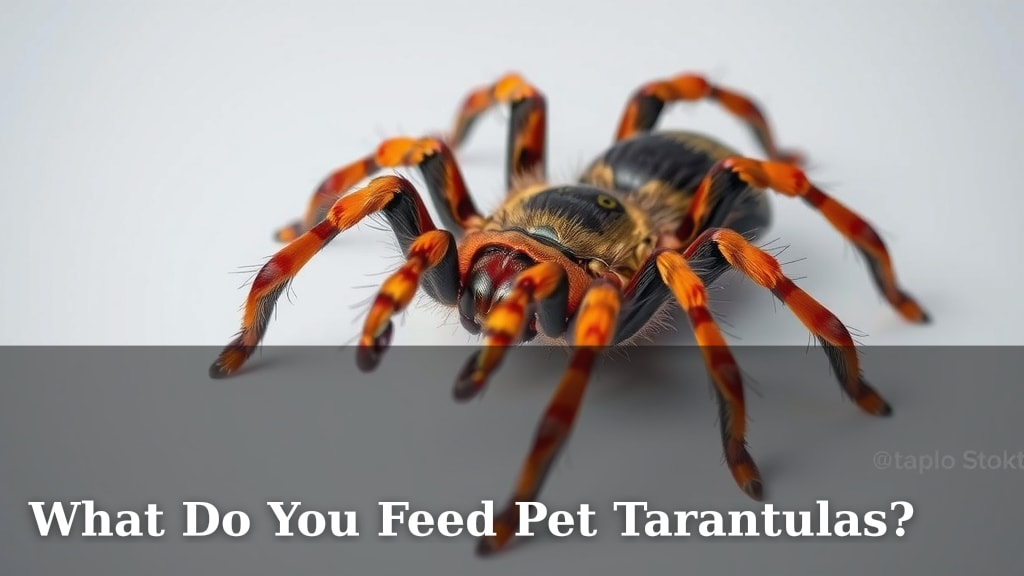
What Do You Feed Pet Tarantulas?
When feeding pet tarantulas, you’ll primarily offer them live insects like crickets and mealworms. These creepy crawlies are the staple diet for most tarantulas, providing the necessary nutrition for your eight-legged friend. Remember, different species have slightly different dietary needs, so knowing your tarantula’s species is key to proper feeding.
Tarantulas are carnivores, meaning they eat meat. They typically eat insects, but some larger species might occasionally enjoy small vertebrates. The size of the prey should match the size of your tarantula’s abdomen. Overfeeding or underfeeding can both cause health issues for your pet, so finding the right balance is important for their well-being.
- Tarantulas eat live insects like crickets and mealworms.
- Always match prey size to your tarantula’s abdomen size.
- Different species have unique dietary needs.
- Avoid feeding them dead prey or anything too large.
- Research your specific tarantula species’ diet.
We’ve put together a guide to help you navigate the world of tarantula diets. Let’s walk through exactly what to feed your pet tarantula and how often.
You’ve got your tarantula, and now you’re wondering what exactly goes into their tiny (or not-so-tiny) tummies. It’s a natural question for any responsible pet owner! Think of your tarantula’s diet like a carefully curated gourmet meal, designed to keep them healthy, happy, and growing.
What Do Tarantulas Eat in Captivity?
In short, you’ll be feeding your pet tarantula a diet primarily consisting of live insects. This is their natural food source, and it’s what they’re biologically equipped to handle. You’re essentially mimicking their wild diet right in your own home.
The Staple Diet: Insects!
The most common and recommended food items are crickets, roaches (like Dubia roaches or red runners), and mealworms. These are readily available at pet stores and online. They provide the essential protein and nutrients your tarantula needs to thrive. You might also consider waxworms or superworms as occasional treats, but these are higher in fat, so moderation is key.
Choosing the Right Insects
It’s important to select healthy, gut-loaded feeder insects. Gut-loading means feeding the insects nutritious food for a day or two before offering them to your tarantula. This transfers those nutrients to your pet. A good gut-loading diet for feeder insects can include fresh vegetables like carrots, sweet potatoes, or commercial gut-load formulas.
Prey Size Matters—A Lot!
This is perhaps the most critical feeding rule. The size of the prey item should be no larger than the tarantula’s abdomen. Think of it like this: if the insect is too big, your tarantula could be injured trying to eat it, or it might overwhelm them. If it’s too small, they might not get enough nutrition. Many beginners err on the side of caution and choose prey that is about half the size of their tarantula’s abdomen.
How to Judge the Size
You can visually compare the insect to your tarantula’s abdomen. Many keepers find that a cricket roughly the length of the tarantula’s body (excluding legs) is a good starting point for many common species. If you have a slings (baby tarantulas), you’ll need even smaller prey like pinhead crickets or wingless fruit flies.
Feeding Frequency: How Often Should You Feed?
The frequency of feeding depends heavily on your tarantula’s age and species. Younger tarantulas, known as slings, have faster metabolisms and need to eat more often to grow. Adult tarantulas, especially, can go for quite a while between meals, sometimes weeks!
Young Tarantulas (Slings)
Slings might need to be fed a few times a week. You can offer them small prey items like pinhead crickets or pre-killed mealworm pieces every 2-3 days. Observe their abdomen; a plump abdomen means they are well-fed. If it looks deflated, it’s definitely time for a meal.
Juvenile Tarantulas
As your tarantula grows, you can gradually increase the size of the prey and decrease the frequency. Juveniles might be fed 1-2 times a week. Again, always watch their abdomen for signs of good nutrition.
Adult Tarantulas
Adult tarantulas are champions of fasting! They can often go 1-2 weeks, and sometimes even longer, between meals. Feeding them once every 1-2 weeks is generally sufficient. Overfeeding adult tarantulas can lead to health issues like obesity, which can shorten their lifespan. Many keepers feed their adults once every two weeks, and this works perfectly well.
Signs Your Tarantula is Ready to Eat
When your tarantula is hungry, it will often show more activity, especially around the time you typically feed them. They might be more receptive to accepting prey. If you offer food and they ignore it, don’t worry; they’re likely not hungry. Remove the uneaten prey to prevent it from bothering your tarantula or potentially harming them if they are molting.
What About Other Foods?
While insects are the primary food, some larger, more robust tarantula species might occasionally eat small vertebrates. This is rare and generally not recommended for most hobbyists unless you are very experienced. Stick to insects; it’s safer and more appropriate for the vast majority of pet tarantulas.
Avoid Certain Foods
Never feed your tarantula dead prey unless it’s a very young sling or it’s been pre-killed for a specific reason and you are present to supervise. Live prey is best as it encourages natural hunting behaviors. Avoid feeding wild-caught insects, as they can carry pesticides or parasites that could harm your tarantula. Also, avoid anything that isn’t an insect or appropriately sized vertebrate; no human food, ever!
Understanding Molting
Tarantulas grow by shedding their exoskeleton, a process called molting. Before and during a molt, your tarantula will typically refuse food. Their abdomen might also appear darker or duller. It’s crucial not to feed a tarantula that is preparing to molt or is in the process of molting. Forcing food during this vulnerable time can be fatal. They are usually very weak and defenseless after molting, so you’ll need to wait a week or two after they’ve molted before offering food again.
A good rule of thumb is to always research your specific tarantula species. Different species have slightly different needs when it comes to diet and feeding schedules. What works for a terrestrial species might be slightly different for an arboreal (tree-dwelling) one.
A Quick Feeding Checklist
- Always offer live insects appropriate for your tarantula’s size.
- Match prey size to the tarantula’s abdomen—no larger!
- Gut-load feeder insects for maximum nutrition.
- Feed slings 2-3 times a week, juveniles 1-2 times, adults every 1-2 weeks.
- Remove uneaten prey promptly.
- Do NOT feed a tarantula that is molting or appears to be preparing to molt.
Conclusion
Feeding your pet tarantula is simpler than you might think, focusing mainly on live insects. Remember to always match the prey size to your tarantula’s abdomen and research your specific species’ dietary needs. Observing your tarantula’s behavior, especially around molting, is key to avoiding feeding mistakes. By providing the right diet and understanding their feeding habits, you’re ensuring your eight-legged friend stays healthy and happy for years to come.
Your next step? Double-check the size of your next feeder insect against your tarantula’s abdomen. This simple step ensures safe and successful feeding.
Frequently Asked Questions
Can I feed my tarantula anything other than insects?
Generally, no. While some very large species might occasionally take tiny vertebrates, insects are the staple and safest diet for almost all pet tarantulas. Stick to gut-loaded insects like crickets and roaches for optimal nutrition.
What should I do if my tarantula won’t eat?
Don’t panic! Tarantulas can go for long periods without eating, especially adults. Ensure you haven’t offered food too close to a molt, and check that the prey is live and appropriately sized. If it persists for weeks, research potential causes for your specific species.
Is it okay to feed my tarantula dead insects?
For most tarantulas, live prey is best as it encourages natural hunting instincts. You can offer pre-killed prey to very young slings (baby tarantulas) or if you are present to supervise, but live is preferred for adults.
How do I know if I’m overfeeding my tarantula?
An overfed adult tarantula may have a very distended, plump abdomen that looks unusually round and firm. Overfeeding can lead to obesity and health problems. It’s better to feed adults less frequently, about once every 1-2 weeks.
What are “gut-loaded” feeder insects?
Gut-loaded insects are feeder insects that have been fed nutritious food for a day or two before being offered to your tarantula. This process transfers those valuable nutrients to your tarantula, making their meals more beneficial.