Fresh Flow vs KittySpout: Which Cat Fountain Wins?
When you compare the Fresh Flow cat water fountain vs KittySpout, the right choice depends on your cat’s drinking style and your cleaning habits. We found that the KittySpout wins for cats who love running water, while the Fresh Flow is better for quiet, low-maintenance hydration. Both are solid options, but they serve very different feline personalities.
We looked at the key differences between these two popular fountains to help you decide. The Fresh Flow uses a traditional filtered reservoir, while KittySpout features a unique faucet-style spout that drips continuously. Your cat’s preferences will play a huge role in which one actually gets used, and that matters more than fancy specs.
- Best overall: KittySpout for cats that love playing with or licking dripping water.
- Best for quiet: Fresh Flow runs almost silently, ideal for light sleepers.
- Easiest to clean: Fresh Flow has fewer parts and a simpler bowl design.
- Best for picky drinkers: KittySpout’s moving water tends to attract cats that ignore bowls.
- Price difference: KittySpout costs a bit more, but both are budget-friendly.
Below, we break down the full comparison, including noise levels, filter costs, and which one your cat is more likely to actually use every day.
Fresh Flow vs. KittySpout: Which Fountain Matches Your Cat’s Personality?
We found that the biggest difference between these two fountains isn’t the filter type or the material. It’s how the water moves. That single factor decides which product your cat will actually drink from. And let’s be real, if your cat won’t use it, the fanciest fountain in the world is just a plastic bowl that takes up floor space.
Before you buy anything, watch your cat at their current water bowl. Do they dip their paw and lick the droplets? Or do they quietly lap from the surface without making a mess? Your answer points directly to the right fountain. We broke down every angle so you can match the machine to the mouser.
How Each Fountain Moves Water
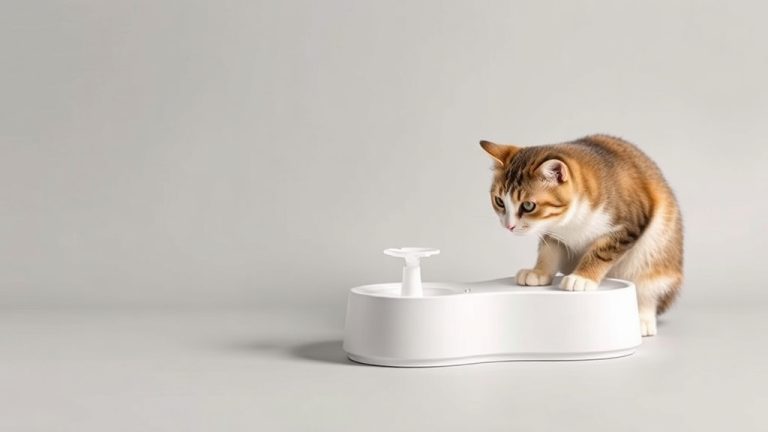
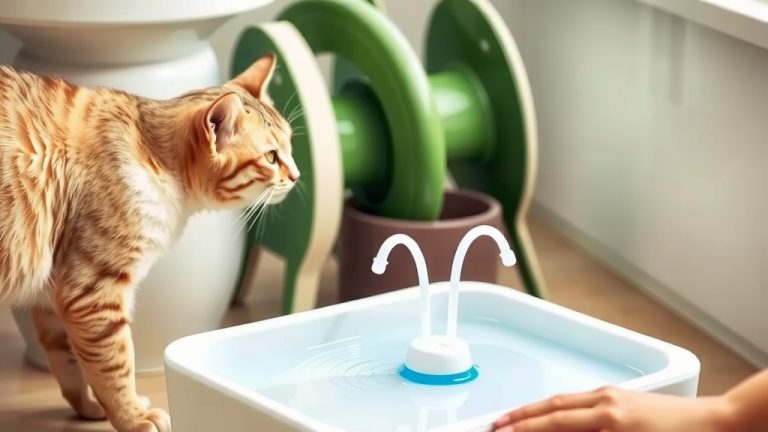
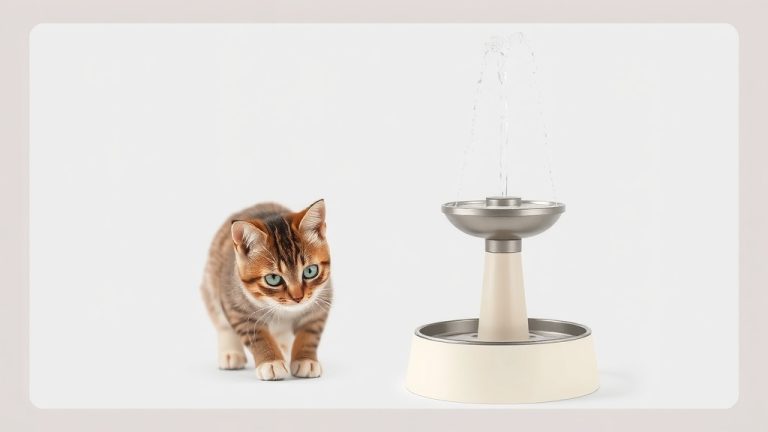
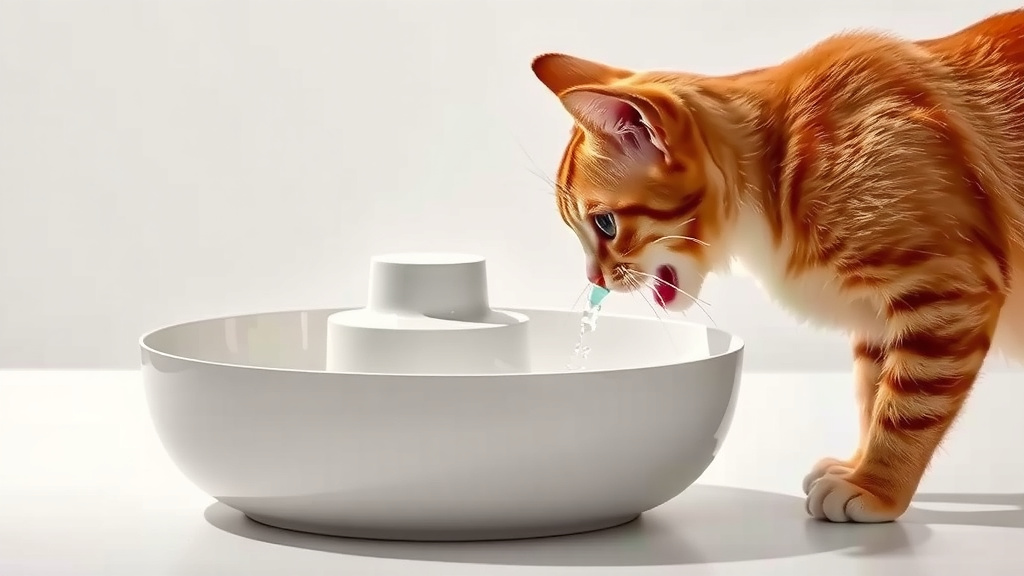
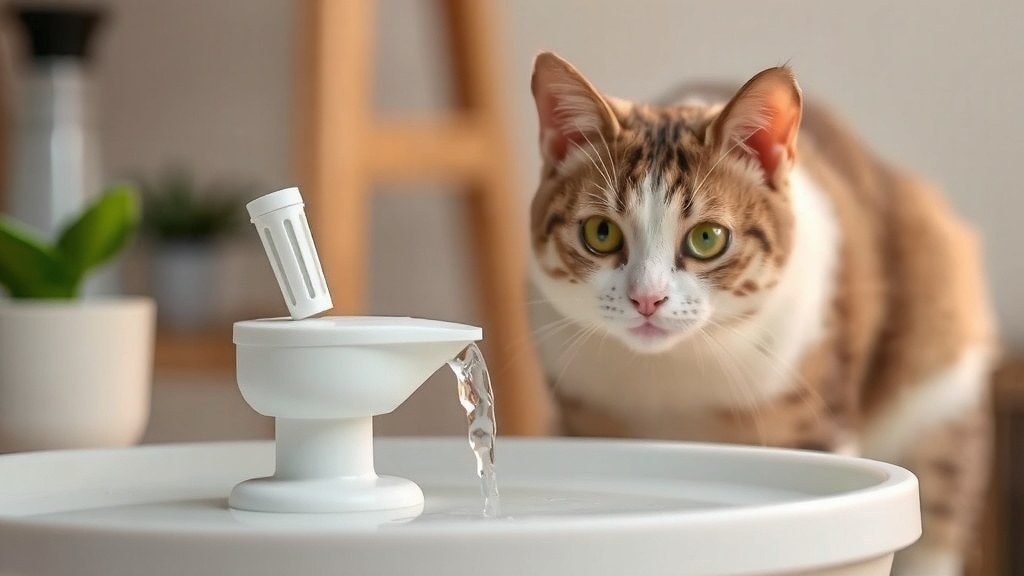
The KittySpout mimics a bathroom faucet left on at a trickle. A small pump pushes water up and over a curved lip, creating a steady stream that drops about an inch into the bowl. Cats see that movement and instantly want to investigate. It triggers their prey drive, like watching a tiny waterfall full of invisible fish.
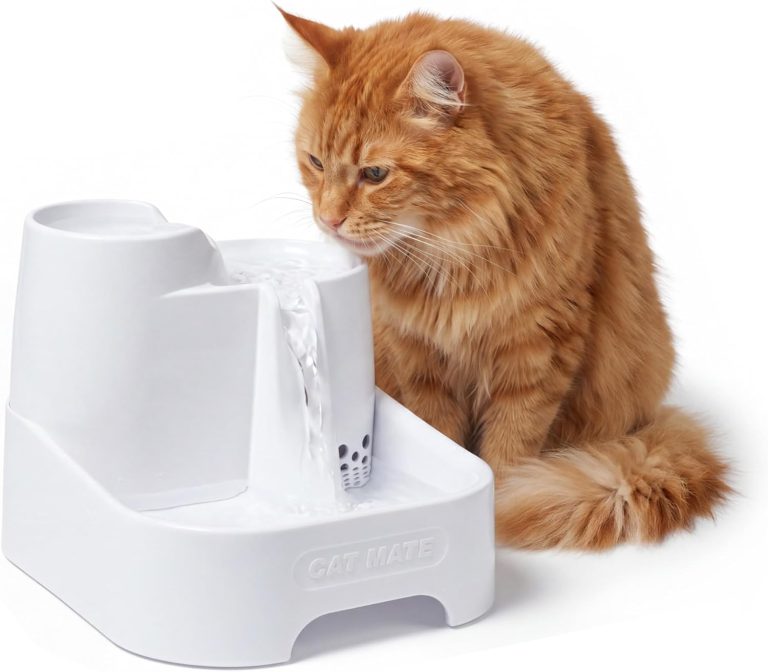
The Fresh Flow takes a simpler approach. It uses a gentle circulation system inside a covered reservoir, so water flows silently beneath the surface. There is no visible stream. Instead, your cat drinks from a small, shallow pool that stays at a consistent level. The water moves, but your cat has to look closely to notice.
We found that cats who play with faucets usually prefer the KittySpout. Cats who just want a fresh, quiet drink tend to pick the Fresh Flow. Neither is wrong, but they cater to opposite instincts.
Noise Levels That Affect Sleep and Stress
You might not think about fountain noise at 2 AM, but your cat certainly does. The KittySpout produces a soft, rhythmic dripping sound. Some owners told us it reminds them of a leaky sink. That sound carries in a quiet bedroom, especially when the house is still.
The Fresh Flow runs nearly silent. The pump is enclosed, and the water never breaks the surface with any force. Many experts note that quiet water sources reduce stress in anxious cats (Cornell Feline Health Center). If your cat spooks easily or you sleep lightly, that silence matters.
We found that noise tolerance is personal. Some cats are drawn to the drip sound of the KittySpout. Others avoid it entirely. If you have multiple cats, one may love the drip while another refuses to go near it. The Fresh Flow is the safer bet for a multi-cat household.
Cleaning Effort and Maintenance: What You’ll Actually Do Weekly
Let me guess, the last thing you want is another gadget that’s a pain to scrub. We found that the Fresh Flow wins on cleaning simplicity. It has fewer nooks and crannies, which means less time with a toothbrush and more time relaxing. The KittySpout requires a bit more attention because of its spout design.
Breaking Down the Parts of Each Fountain
The Fresh Flow consists of three main pieces: the reservoir, the pump, and the bowl. You take apart the reservoir, rinse the pump, and wipe the bowl. The whole job takes under five minutes. There aren’t any tubes or narrow channels where slime can hide.
The KittySpout has a few more components. The spout comes off for cleaning, and the pump has a longer intake tube. You also need to wipe down the spout itself because saliva and dust build up on the lip. We found that bacteria hide in the spout joint if you skip regular cleanings.
If you’re someone who lets cleaning slide for a few days, the Fresh Flow forgives you. The KittySpout punishes neglect with visible film. Neither is hard to maintain, but one is definitely easier.
Filter Replacement Costs Compared
Filters are where fountain makers make their money. Both units use standard charcoal filters, and you need to swap them every two to four weeks. We found that the Fresh Flow filters cost slightly less per pack. The KittySpout requires two filters per change because of its two-stage design.
- Fresh Flow: one filter, changed every 3 weeks, lower yearly cost
- KittySpout: two filters, changed every 4 weeks, higher yearly cost
- Both use activated charcoal to remove odors and improve taste
- Neither filter needs replacement more than once a month
- Buying in bulk saves you about 20 percent on both brands
Yearly costs are close, maybe a ten to fifteen dollar difference. That’s not a dealbreaker. But it adds up over the lifespan of the unit, typically two to three years.
Water Capacity and How Often You’ll Refill
If you travel for weekends or work long shifts, capacity matters. We found that the Fresh Flow holds about 60 ounces of water. The KittySpout holds roughly 70 ounces. On the surface, that seems similar. The real difference is how much water gets wasted.
Evaporation and Splash Factors
The KittySpout loses water to evaporation and splashing. The dripping stream causes small droplets to scatter, especially if your cat bats at the stream. That playful behavior reduces the effective capacity by almost 20 percent. You’ll refill more often than you’d expect.
The Fresh Flow circulates beneath the surface, so evaporation is minimal. The covered reservoir keeps dust and hair out too. We found that the Fresh Flow lasts longer between refills, despite its slightly smaller tank. For a three-day weekend away, the Fresh Flow performs better.
Does More Water Mean Your Cat Drinks More?
Not necessarily. A larger reservoir doesn’t encourage drinking. The water movement and freshness do that. Many vets point out that cats drink more when water is moving and cool (American Veterinary Medical Association). Both fountains keep water moving, so hydration levels should improve with either choice.
Watch your cat’s water intake for a week before switching. If they currently drink from a dripping sink, they already show a preference. If they ignore the sink and use their bowl, the Fresh Flow is the logical upgrade.
Material Safety and Durability Over Time
Nobody wants to replace a fountain after six months because plastic cracked or paint peeled. We found that both fountains use food-grade materials, but the durability differs. The Fresh Flow is built from a thick, opaque plastic that resists scratching. The KittySpout uses a clearer plastic that shows water level easily but scratches faster.
Does the KittySpout Harbor Bacteria in Its Design?
The spout and the joint where it connects create a potential biofilm trap. Biofilm is that slippery layer of bacteria that forms on wet surfaces. It’s harmless if cleaned regularly, but gross if ignored. Studies show that pet water bowls harbor significant bacteria without regular cleaning (NCBI). The KittySpout requires more diligence.
The Fresh Flow surface is smooth and open, so you can wipe every inch. There are no hidden seams. If you’re a germ-conscious pet parent, the Fresh Flow will give you peace of mind.
What Happens When the Pump Gives Out?
Both fountains use submersible pumps rated for continuous operation. We found that pumps last anywhere from one to two years with proper maintenance. The KittySpout pump is slightly more exposed and can get clogged with hair faster. The Fresh Flow pump sits behind a protective barrier in the reservoir.
Replacement pumps are available for both models. They cost about fifteen to twenty dollars each. Neither brand makes you buy a whole new fountain just for a dead pump, which we appreciate.
Which Fountain Is Right for Your Specific Cat?
We can’t pick for you, but we can help you narrow it down. Let’s look at common cat behaviors and match them to the fountain that best serves them.
Is Your Cat a Faucet Lover?
Does your cat jump on the sink and meow until you turn on the tap? That’s a clear signal. The KittySpout replicates that exact experience. The dripping stream satisfies their urge. We found that faucet-obsessed cats take to the KittySpout immediately. It’s like installing a mini sink just for them.
If you skip the KittySpout for a quieter fountain, your cat might still cry at the real sink. That defeats the purpose of buying a fountain in the first place.
Is Your Cat Easily Spooked or Sound-Sensitive?
The Fresh Flow is your choice. The near-silent operation won’t trigger anxiety. Loud ticking, dripping, or humming can make nervous cats avoid water entirely. Dehydration gets dangerous fast, especially for male cats prone to urinary crystals.
Many veterinarians recommend quiet, consistent water sources for anxious cats (Mayo Clinic). The Fresh Flow won’t add stress to their environment. It just sits there quietly and does its job.
Do You Have Multiple Cats?
Multi-cat homes benefit from multiple water sources anyway. But if you’re buying one fountain, the Fresh Flow is more neutral. The KittySpout attracts one cat’s attention with its movement, and that can cause guarding behavior. A dominant cat might hoard the spout, leaving others thirsty.
With the Fresh Flow, there’s no stream to monopolize. Multiple cats can drink from the wide bowl at the same time. That reduces tension and ensures everyone stays hydrated.
The Cleaning Checklist: What to Do Weekly With Either Fountain
Whatever you choose, regular maintenance is non-negotiable. We put together a simple checklist that works for both models. Post it on the fridge and you’ll never forget.
- Empty the old water completely every three to four days
- Disassemble the fountain and rinse all parts under warm water
- Use a soft brush to scrub the pump and remove any hair or sludge
- Soak all parts in a mild vinegar solution for fifteen minutes
- Rinse thoroughly so no vinegar taste remains in the plastic
- Replace the filter on schedule and track the date on the box
That’s it. Ten minutes, twice a week, and your fountain stays safe and fresh. Skipping these steps invites bacterial growth and slimy buildup that can make your cat sick. Don’t let a convenience item become a health hazard.
| Feature | Fresh Flow | KittySpout |
|---|---|---|
| Water movement | Silent circulation | Visible dripping stream |
| Noise level | Nearly silent | Soft rhythm drip |
| Cleaning ease | Simple, few parts | More parts, spout needs focus |
| Filter costs | Lower yearly cost | Slightly higher yearly cost |
| Effective capacity | 60 ounces, minimal loss | 70 ounces, some splash loss |
| Best for | Quiet, low-maintenance homes | Faucet-loving playful cats |
We found that both fountains are well-built and worth their price. The choice comes down to your cat’s drinking habits and your tolerance for cleaning. If your cat plays with water, the KittySpout will keep them entertained. If you want set-and-forget simplicity, the Fresh Flow is your partner.
Still torn between the two? Think about your cat’s favorite spot in the house. The faucet-obsessed cat already told you the answer. The quiet lapper deserves a quiet fountain. Listen to your cat, and you’ll make the right call.
Conclusion
You now know the real difference between these two fountains. It’s not about specs, it’s about your cat’s personality. The KittySpout wins for faucet-loving cats who need visual stimulation to drink. The Fresh Flow is your best bet if you want quiet operation and effortless cleaning.
Watch your cat at the sink for one day. That tells you everything you need to know. If they paw at drips, grab the KittySpout. If they just want fresh water without a show, the Fresh Flow delivers. Both keep your cat hydrated, but only one fits your home. Pick the one that matches your cat’s habits and your cleaning style, and you will not regret it.
Frequently Asked Questions
Can I leave either fountain running while I’m on vacation?
You can leave both running for a few days. The Fresh Flow holds water longer because it loses less to splash and evaporation. For anything over three days, you should have someone check the water level. Neither fountain has an auto-shutoff, so a dry pump can burn out fast.
Will my kitten be safe using these fountains?
Yes, both fountains are safe for kittens. The pumps are fully submersed and enclosed, so there is no exposed electrical risk. The KittySpout’s stream is gentle enough for small cats. Just make sure the water level stays above the minimum line so the pump runs smoothly.
Do these fountains work for cats that only drink from running taps?
If your cat is obsessed with the bathroom faucet, the KittySpout is the better match. It mimics that exact dripping motion they love. The Fresh Flow uses hidden circulation, which might not satisfy a cat that needs to see moving water.
How often should I replace the pump in either fountain?
With weekly cleaning, most pumps last one to two years. Hard water and hair buildup can shorten that lifespan. When the water flow slows down or the pump gets loud, that’s your sign to swap it. Replacement pumps cost about fifteen to twenty dollars for both brands.
Can I use tap water or does it need to be filtered?
You can use regular tap water in both fountains. The built-in charcoal filters handle chlorine and odors. If you have very hard water, you might see white mineral buildup. A quick vinegar soak during your weekly cleaning takes care of that easily.