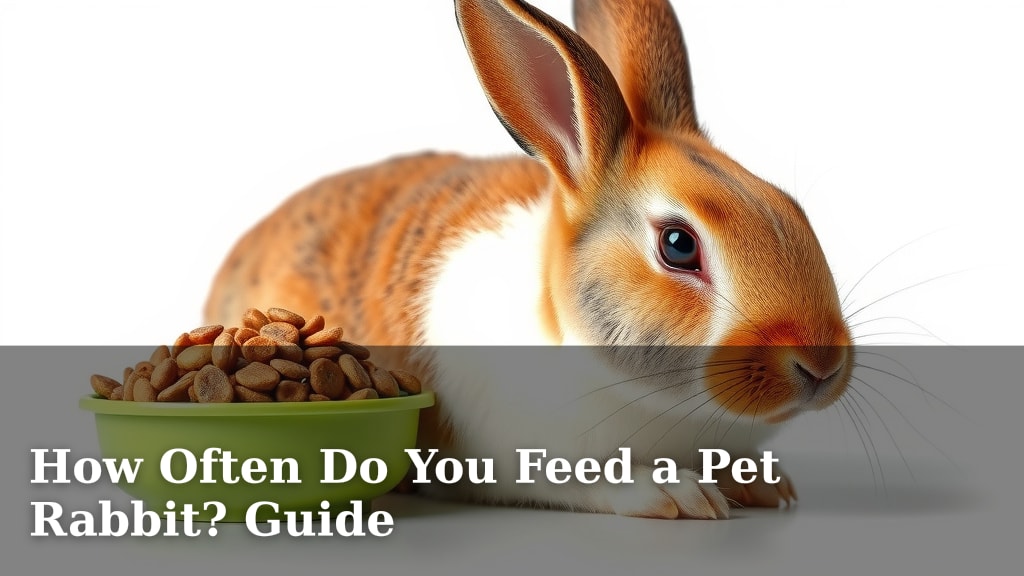
How Often Do You Feed a Pet Rabbit? Guide
Feeding your pet rabbit is all about consistency and providing the right types of food. You’ll want to offer unlimited fresh hay daily, a measured amount of high-quality pellets, and a daily portion of fresh leafy greens. This balanced approach ensures your bunny gets the nutrients they need for a healthy life.
Knowing how often to feed different parts of your rabbit’s diet is key to their well-being. While hay is always available, pellets and greens are portioned out. Understanding these feeding schedules helps prevent common health issues like digestive problems or obesity. It’s a simple routine that makes a big difference.
- Hay is a free-choice food, meaning it should always be available.
- Pellets are usually given once or twice a day in a measured amount.
- Fresh greens are typically offered daily, forming a healthy part of their diet.
- Water should always be fresh and accessible in a bowl or bottle.
Let’s hop into the details and make sure your rabbit’s mealtime is perfect.
Understanding Your Rabbit’s Feeding Schedule
Knowing how often to feed your pet rabbit is more art than science, but it boils down to a few key principles. It’s all about providing the right nutrition at the right times. We want to set your bunny up for a long, happy life. This means understanding what they eat and when.
The main components of your rabbit’s diet are hay, pellets, and fresh greens. Each plays a vital role. They aren’t just snacks; they are building blocks for good health. Let’s break down the timings for each.
The Importance of Unlimited Hay
Think of hay as the superstar of your rabbit’s diet. It’s not something you portion out; it’s a constant source of nutrition and enrichment. Hay provides essential fiber. This fiber keeps their digestive system working smoothly, which is incredibly important for bunnies. Their guts are sensitive little ecosystems.
We found that hay should be available 24/7. Your rabbit should always have access to fresh, high-quality hay. This means refilling their hay rack or feeding station multiple times a day if needed. You want them to graze whenever the mood strikes.
Pellets: The Nutrient Boost
Rabbit pellets are like a multivitamin for your bunny. They offer concentrated nutrients. However, too many pellets can lead to health problems. Overfeeding pellets can cause obesity. It can also reduce their appetite for hay, which is far more important. Research suggests pellets should be a smaller part of the diet as they grow. Young bunnies need more, but adults need much less.
How Much to Feed Adult Rabbits
For an adult rabbit, the general guideline is about 1/4 cup of high-quality pellets per 5 pounds of body weight per day. This is a starting point. Your vet can help you fine-tune this amount. Factors like activity level and breed can influence needs. We always recommend consulting your veterinarian for personalized advice.
When to Offer Pellets
Pellets are typically fed once or twice a day. Many owners choose to feed them in the morning or evening. You can divide the daily portion into two smaller feedings. This mimics a more natural foraging behavior. It also helps keep your rabbit interested in mealtime. Just make sure you’re measuring accurately.
Fresh Greens: A Daily Delight
Fresh leafy greens are a wonderful addition to your rabbit’s diet. They provide vitamins, minerals, and hydration. They also add variety, keeping mealtime exciting for your bunny. It’s like giving them a fresh salad bar!
Introducing New Greens
When introducing new greens, do so one at a time. Wait at least 24 hours before offering another new type. This helps you monitor your rabbit for any digestive upset. Some greens are great, while others can cause issues if given in large quantities. Think of it as a taste-testing process.
What to Feed Daily
A good rule of thumb is to offer about 1 cup of packed leafy greens per 2 pounds of body weight per day. You can offer a mix of 2-3 different types of greens each day. Good choices include romaine lettuce, kale (in moderation), spinach (in moderation), parsley, and cilantro. We found that a varied mix is often best for providing a range of nutrients.
Always wash greens thoroughly before feeding them to your rabbit. Remove any pesticides or contaminants. Freshness is key to their health. Discard any uneaten greens after a few hours. They can spoil quickly and attract insects.
Treats: Occasional Indulgences
Treats are not a daily staple. They should be given sparingly. Think of them as special rewards. Too many sugary or starchy treats can cause serious digestive problems. Many fruits and starchy vegetables fall into this category. They should only be offered in tiny amounts, perhaps a few times a week at most.
Safe Treat Options
Small pieces of fruits like apple (no seeds), banana, or berries are fine occasionally. A small slice of carrot or sweet potato can also be a treat. The key is moderation. A tiny piece, no bigger than your pinky fingernail, is often enough. Remember, hay and greens are their main food sources.
| Food Type | Frequency | Amount | Notes |
|---|---|---|---|
| Hay | Always Available (Unlimited) | As much as they want | Essential for digestion. Timothy hay is great for adults. |
| Pellets | Once or Twice Daily | Approx. 1/4 cup per 5 lbs body weight (adults) | High-quality, plain timothy-based pellets. Measure carefully. |
| Leafy Greens | Once Daily | Approx. 1 cup per 2 lbs body weight (adults) | Variety is good. Wash thoroughly. Introduce slowly. |
| Treats | Sparingly (Few times a week) | Tiny portions (e.g., pinky fingernail size) | Fruits, root veggies. Avoid sugary/starchy items. |
Don’t Forget the Water!
Fresh, clean water is absolutely vital. Rabbits need access to water at all times. You can offer water in a heavy ceramic bowl or a sipper bottle. Many vets and experienced owners prefer bowls. They allow for a more natural drinking posture and are easier to clean. Ensure the bowl is heavy enough not to be tipped over. Change the water daily, or more often if it gets dirty.
Establishing a Routine
Consistency is key for your rabbit’s health. Establishing a daily feeding routine can prevent digestive issues. It also helps your bunny feel secure. Try to feed pellets and greens around the same time each day. This predictability helps their digestive system regulate. They’ll start to look forward to their meals!
Here’s a quick checklist to keep you on track:
- Always ensure unlimited hay is available.
- Measure pellets accurately for your rabbit’s size.
- Offer fresh greens daily after introducing them slowly.
- Provide fresh water at all times.
- Feed treats only in very small amounts.
- Stick to a consistent feeding schedule.

Conclusion
You’ve learned that consistent feeding is essential for your rabbit’s health. Unlimited hay should always be available. Measured amounts of pellets and fresh greens, given daily and on a schedule, complete their balanced diet. Remember to introduce new greens slowly and offer treats sparingly. Prioritizing fresh water and sticking to a routine will help your bunny thrive. Your next step is to observe your rabbit’s eating habits and adjust their food portions with your veterinarian’s guidance to ensure they are getting exactly what they need.
Frequently Asked Questions
Can I feed my rabbit the same type of hay every day?
While Timothy hay is recommended for adult rabbits due to its fiber content, offering a mix of grass hays like orchard grass or oat hay can provide variety. Research suggests that variety keeps their interest and provides a broader range of nutrients. Always ensure the hay is fresh and dry.
What should I do if my rabbit isn’t eating their pellets?
If your rabbit suddenly stops eating pellets, it could be a sign of a health issue or that they are filling up on hay or greens. Ensure their hay and greens are fresh and not excessive. If the problem persists for more than a day, it’s important to consult your veterinarian promptly, as changes in appetite can indicate serious health concerns.
Is it okay to give my rabbit fruits every day?
No, fruits should be considered an occasional treat, not a daily food. They are high in sugar and can lead to digestive upset or weight gain if fed too frequently. We found that a tiny piece, about the size of your pinky fingernail, offered only a few times a week, is a safe amount.
How do I know if I’m feeding my rabbit the right amount of greens?
A good starting point is about 1 cup of packed leafy greens per 2 pounds of your rabbit’s body weight daily. Monitor your rabbit’s weight and energy levels. If they seem to be gaining too much weight, you might slightly reduce the greens. If they seem underweight, consult your vet about increasing portions.
Should I use a sipper bottle or a bowl for my rabbit’s water?
Many owners and veterinarians recommend ceramic bowls for water. They allow rabbits to drink more naturally and often encourage higher water intake. Bowls are also easier to clean thoroughly. Just ensure the bowl is heavy enough that your rabbit can’t tip it over, and always provide fresh water daily.