What to Feed a Pet Crow
Feeding a pet crow involves providing a varied diet that mimics what they’d find in the wild. Crows are omnivores, so you’ll want to offer a mix of proteins, fruits, vegetables, and grains. It’s important to avoid processed foods and focus on natural, whole ingredients to keep your intelligent avian friend healthy and happy.
While crows are known for eating almost anything, a balanced diet is key for their well-being. Think of it like a balanced meal for yourself – you wouldn’t want to eat junk food every day, right? Providing the right nutrients ensures they have the energy for their clever antics and robust health. We’ve researched what nutrition experts recommend for corvids to help you create the best feeding plan.
- Offer a mix of proteins like cooked eggs or small amounts of lean meat.
- Include fresh fruits and vegetables.
- Supplement with grains and seeds.
- Avoid salty, sugary, and processed human foods.
- Always provide access to fresh, clean water.
Ready to learn more about keeping your crow satisfied and healthy? Let’s dive into the specific foods that are safe and beneficial for your feathered companion.
What to Feed Your Smart Crow Companion
Feeding your crow means offering a diet that keeps their sharp minds and bodies fueled. Since these birds are omnivores, they thrive on a variety of foods. You’ll want to provide a mix that mimics their natural foraging habits. Think of it like planning your own meals; you wouldn’t eat only one thing and expect to feel great, right?
Your crow needs a balanced diet for optimal health. This means including proteins, fruits, vegetables, and some grains. A well-fed crow is an active and happy crow, ready for their next clever trick. We’ve gathered information to help you create the perfect feeding plan for your feathered friend.
The Core Components of a Crow’s Diet
The foundation of your crow’s diet should be a mix of protein sources and fresh produce. This combination provides essential nutrients for energy and overall well-being. Many wildlife experts recommend a diet that is roughly 50% protein and 50% fruits and vegetables.
Protein Powerhouses for Your Crow
Protein is vital for muscle development and energy. Crows in the wild eat insects, small rodents, and even carrion. You can replicate some of these protein sources at home.
Cooked Meats and Eggs
Small amounts of cooked lean meats are a great option. Plain, unseasoned chicken, turkey, or beef can be offered in tiny pieces. Cooked eggs are also an excellent source of protein and other nutrients. You can offer them scrambled or hard-boiled. Always ensure the meat is thoroughly cooked and cooled. Avoid any seasoned or heavily processed meats, as these can be harmful.
Insects and Other Small Critters
If you can safely source them, insects like mealworms, crickets, or earthworms are natural and highly nutritious food for crows. Many pet stores sell feeder insects that are raised specifically for reptiles and birds, making them a safe choice. Be sure to gut-load the insects with healthy food before feeding them to your crow. This transfers the nutrients to your pet.
Vibrant Fruits and Vegetables
Fresh fruits and vegetables offer essential vitamins, minerals, and fiber. They add variety and hydration to your crow’s diet.
Safe Fruits to Offer
Most fruits are safe for crows in moderation. Berries like blueberries, strawberries, and raspberries are excellent choices. Other good options include apples (seeds removed), grapes, melon, and bananas. Remember to remove pits and large seeds from fruits like apples and cherries, as some seeds contain small amounts of cyanide.
Recommended Vegetables
A wide array of vegetables is beneficial. Leafy greens such as kale, spinach, and romaine lettuce are good. Cooked sweet potatoes, carrots, peas, and corn are also popular with crows. You can offer vegetables raw or lightly steamed to make them easier to digest. Avoid feeding large amounts of starchy vegetables like potatoes. It’s best to offer a colorful mix for a broad spectrum of nutrients.
Supplements and Grains for Balance
While protein and produce form the bulk of the diet, certain grains and supplements can round out your crow’s nutrition. These provide additional energy and necessary trace elements.
Healthy Grains and Seeds
Cooked grains like oatmeal (plain, unsweetened), brown rice, and quinoa can be offered in small quantities. Some seeds, such as sunflower seeds or millet, can be given as treats, but in moderation due to their fat content. Crows are natural foragers, and a little variety here is good.
Nutritional Supplements
Many bird experts recommend a high-quality avian vitamin and mineral supplement. This is especially important if you are not able to provide a perfectly balanced diet daily. A calcium supplement can also be beneficial. Consult with a veterinarian experienced with avian care to determine the right supplements and dosages for your crow. This ensures they are getting everything they need.
Foods to Absolutely Avoid
Just as important as knowing what to feed your crow is knowing what to keep away from them. Some common human foods are toxic or unhealthy for these intelligent birds.
The Danger of Processed and Salty Foods
Processed human foods should be avoided entirely. This includes items like bread, crackers, chips, and sugary cereals. These items offer little nutritional value and can cause digestive problems or more serious health issues. Crows have sensitive systems.
Beware of Toxins
Never feed your crow avocado, as it contains a toxin that is harmful to birds. Chocolate is also toxic. Onions and garlic, even in small amounts, can damage red blood cells. Limit or avoid fatty or fried human foods, as these can lead to obesity and other health problems. Always check with a vet if you are unsure about a food item.
Hydration: The Unsung Hero
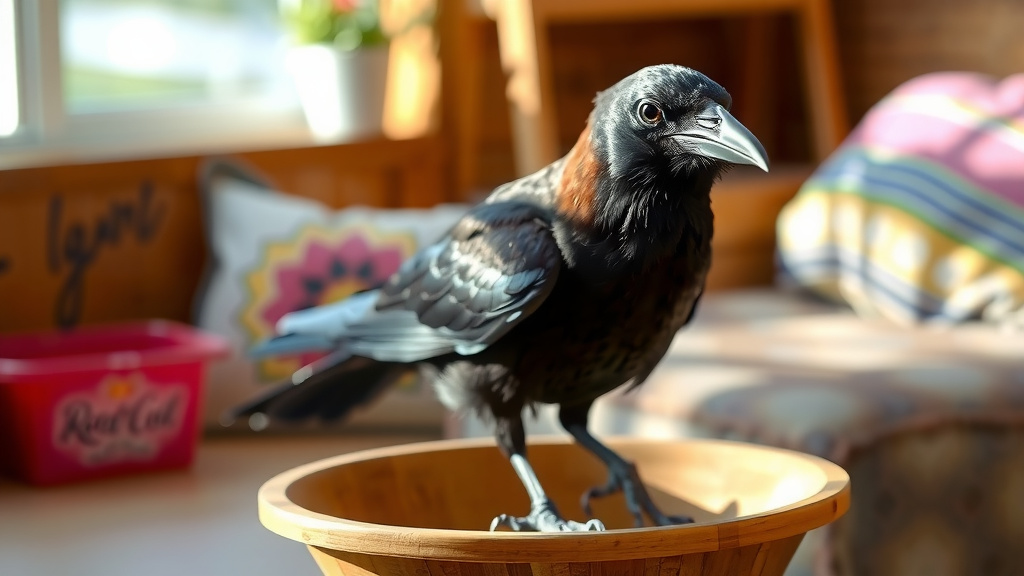
Clean, fresh water is as critical as food for your crow. They use water not only for drinking but also for bathing and cleaning their food. Provide a sturdy, wide bowl that is kept clean daily. Crows love to splash, so be prepared to change the water frequently.
A Sample Feeding Checklist for Your Crow
Here’s a quick guide to help you build a balanced meal for your crow:
- Cooked lean protein (plain chicken, scrambled egg)
- A colorful mix of fresh fruits (berries, apple chunks)
- A variety of fresh vegetables (leafy greens, cooked carrots)
- Small portion of cooked grains (oatmeal, brown rice)
- Occasional insect treat (mealworms, crickets)
- Always fresh, clean water available
Conclusion
You’ve learned how to nourish your clever crow with a diet rich in natural foods. Remember, a healthy crow needs a balanced mix of proteins, fresh fruits, and vegetables. Supplementing with safe grains and checking with a vet for vitamins ensures they get all their nutritional needs met. Always avoid processed human foods and known toxins like avocado. Your commitment to providing fresh water and a varied diet will keep your intelligent companion thriving. Start implementing these feeding tips today to support your crow’s energy and well-being!
Frequently Asked Questions
How much should I feed my pet crow each day?
Feeding amounts can vary based on your crow’s age, size, and activity level. A good starting point is to offer about 10-15% of their body weight daily in food. Observe your crow’s habits and adjust portions to maintain a healthy weight. It’s always best to consult with an avian veterinarian for personalized recommendations.
Can my pet crow eat raw meat?
While crows in the wild eat raw prey, it’s generally safer to offer cooked lean meats to pet crows. Raw meat can carry bacteria like Salmonella or E. coli, which can be harmful. Thoroughly cooking meat plain, without seasoning, helps eliminate these risks. Ensure it’s cooled before serving.
What kind of fresh water should I provide?
Your crow needs constant access to fresh, clean water. Provide water in a sturdy, wide-mouthed bowl that is deep enough for them to drink and bathe in. Crows enjoy splashing, so be prepared to change their water multiple times a day to keep it clean and sanitary. Avoid adding anything to the water unless specifically recommended by a vet.
Are there any specific fruits or vegetables that are bad for crows?
Yes, you must avoid avocado, onions, and garlic, as these are toxic to birds. Also, be cautious with fruit seeds and pits, as some contain cyanide. Limit starchy vegetables like raw potatoes in large quantities. It’s always wise to research any new food item before offering it to your crow.
How often should I offer insects or seeds?
Insects like mealworms and crickets can be given as treats or a small part of their protein intake a few times a week. Seeds, especially fatty ones like sunflower seeds, should be offered sparingly due to their high fat content, primarily as occasional treats. Focus on lean proteins and fresh produce as the daily staples for your crow’s diet.