
What Can I Feed My Pet Bunny? Safe Foods
You can feed your pet bunny a diet based primarily on fresh hay, supplemented with leafy greens and a small amount of high-quality pellets. This hay-based approach is essential for their digestive health and overall well-being. Always ensure fresh water is available.
Understanding what’s safe is key to keeping your bunny happy and healthy. While hay forms the backbone, not all vegetables and fruits are suitable for rabbits. Research and found that introducing new foods gradually is important to avoid tummy upset. Many experts say a varied diet, when done right, keeps them curious and nourished.
TL;DR:
- Hay is the most important part of your bunny’s diet.
- Leafy greens offer vitamins and minerals.
- Pellets should be given in small amounts.
- Always provide fresh water.
- Introduce new foods slowly.
We’ve researched the best feeding practices for bunnies. Below, we break down exactly what you can safely feed your furry friend, and what to avoid.
Building a Healthy Diet for Your Bunny
Feeding your rabbit the right foods is essential for their health. A proper diet helps prevent common health issues. It keeps your bunny happy and active. We’ve researched the best practices for bunny nutrition.
The Foundation: Hay, Hay, and More Hay!
Hay is the undisputed champion of your bunny’s diet. It should make up about 80% of what they eat every single day. Think of it as their main course, appetizer, and dessert, all rolled into one! This fibrous food is incredibly important for their digestion. It helps keep their gut moving smoothly.
Why is Hay So Important?
Rabbits have sensitive digestive systems. Hay provides the necessary roughage to keep things working correctly. It also helps wear down their continuously growing teeth. Without enough hay, bunnies can develop serious dental problems. They can also suffer from gastrointestinal stasis, a life-threatening condition (Blue Cross).
The type of hay matters too. Timothy hay is a popular and excellent choice for adult rabbits. Orchard grass and oat hay are also good options. Alfalfa hay is richer in calcium and protein. It’s best for young, growing bunnies or pregnant/nursing mothers, but less ideal for adult pets.
How Much Hay?
Your bunny should have unlimited access to fresh hay. This means a constant supply is available throughout the day and night. You can place it in a hay rack, a box, or simply scatter it in their living area. The goal is to encourage constant grazing.
Leafy Greens: The Colorful Additions
Once your bunny is a few months old, you can start introducing leafy greens. These provide essential vitamins and minerals. They add variety and hydration to your bunny’s diet. Aim for about one cup of greens per two pounds of body weight daily, split into two servings (RSPCA).
Safe and Nutritious Greens
Many common vegetables are safe and healthy for rabbits. Dark, leafy greens are often the best choices. Some excellent options include:
- Romaine lettuce
- Kale (in moderation due to calcium)
- Spinach (in moderation due to oxalates)
- Parsley
- Cilantro
- Dandelion greens (ensure they are pesticide-free)
- Bok choy
- Celery leaves
- Arugula
It’s a good idea to offer a variety of greens. This ensures your bunny gets a wide range of nutrients. Rotating your selection daily is a great strategy. Imagine offering them a salad bar of delicious, healthy choices!
Introducing New Greens
When introducing any new food, do so gradually. Start with a very small amount, perhaps just a leaf or two. Monitor your bunny for any signs of digestive upset, like soft stools or reduced appetite.
If they tolerate it well, you can slowly increase the amount over a few days. This cautious approach helps prevent tummy troubles. It’s like introducing a new friend to the family – slowly and with observation!
Pellets: A Small, Important Supplement
High-quality pellets should make up a small portion of your bunny’s diet, around 5%. They provide concentrated nutrients that might be missing from hay and greens alone. Look for plain, high-fiber pellets made from timothy hay for adult rabbits. Avoid mixes with seeds, nuts, or colorful pieces, as these are unhealthy junk food for bunnies.
Portion Control is Key
Overfeeding pellets can lead to obesity and digestive issues. The amount you feed depends on your bunny’s age, weight, and activity level. As a general guideline, adult rabbits should receive about 1/8 to 1/4 cup of pellets per five pounds of body weight per day (House Rabbit Society).
Young bunnies (under 6 months) may need more pellets. They are growing rapidly. Always consult with a rabbit-savvy veterinarian for specific recommendations for your pet.
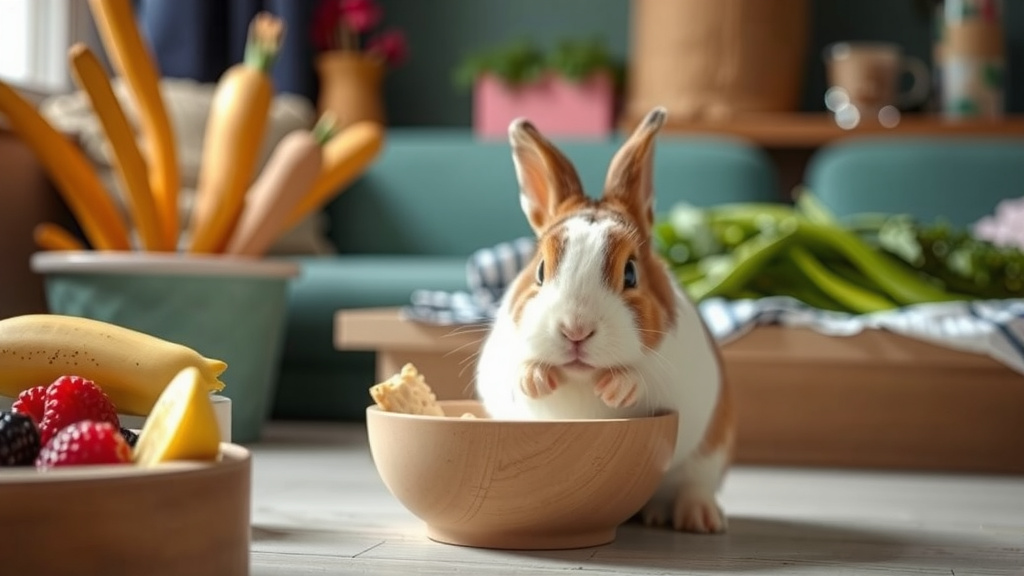
Treats: Sparingly and Safely
When you want to give your bunny a special treat, choose wisely. Fruits and starchy vegetables should only be offered in very small quantities, perhaps once or twice a week. They are high in sugar and can cause digestive upset if given too often.
Safe Treat Options
A small slice of fruit or a tiny piece of a safe vegetable can be a wonderful reward. Consider these options:
- Apple slices (seeds removed)
- Banana slices (very small piece)
- Berries (strawberries, blueberries, raspberries – a couple of berries)
- Carrot slices (small amount due to sugar content)
- Small pieces of bell pepper
Remember, treats should not exceed 1-2% of their daily diet. A good rule of thumb is that a treat should be no larger than your thumbnail.
What to Absolutely Avoid
Some foods can be toxic or very harmful to rabbits. It’s vital to know what to keep far away from your bunny’s reach. Never feed your rabbit:
- Avocado
- Onion, garlic, chives
- Potatoes and potato leaves
- Rhubarb
- Chocolate or any human junk food
- Iceberg lettuce (low in nutrients, high in water)
- Seeds and nuts
- Beans
- Bread, crackers, pasta, or sugary cereals
When in doubt, err on the side of caution. If you’re unsure if a food is safe, it’s best to avoid giving it to your bunny altogether.
Fresh Water: Always Available!
Just as important as food is constant access to fresh, clean water. Rabbits need to drink throughout the day to stay hydrated and maintain healthy digestion. You can offer water in a heavy ceramic bowl or a sipper bottle, or both.
Water Bowl vs. Sipper Bottle
Many rabbits prefer drinking from a bowl because it mimics their natural drinking behavior. Bowls also allow them to drink more freely. However, bowls can sometimes get tipped over or filled with hay. Sipper bottles are a good backup or alternative, ensuring water stays clean.
Regardless of the method you choose, change the water daily. Clean the bowl or bottle regularly to prevent bacteria buildup. Dehydration can quickly become a serious health concern for rabbits.
A Quick Checklist for Safe Feeding
Here’s a simple checklist to help you remember the essentials:
- Always have unlimited fresh hay available.
- Offer a variety of safe leafy greens daily.
- Provide a small, measured portion of high-fiber pellets.
- Introduce new foods very slowly and one at a time.
- Give fruits and starchy veggies as rare, tiny treats.
- Ensure fresh, clean water is always accessible.
Conclusion
Feeding your bunny a balanced diet is key to their long, happy life. Remember that hay should always be the star of their meals, making up the vast majority of what they eat. Leafy greens offer essential nutrients, while pellets should be given in small, measured amounts. Treats should be rare and tiny.
By offering fresh water and introducing new foods slowly and carefully, you’re setting your bunny up for optimal health and digestive well-being. Your diligent care makes all the difference in their well-being.
Now that you know the essentials, you can confidently create a delicious and nutritious meal plan for your beloved bunny!
Frequently Asked Questions
How much fresh hay should my bunny eat daily?
Your bunny should have unlimited access to fresh hay at all times. Hay provides the necessary fiber for their digestion and helps wear down their teeth. Think of it as their main food source, available around the clock.
Can I feed my rabbit the same leafy greens every day?
While variety is good, it’s best to offer a rotation of safe leafy greens. This ensures your bunny gets a broad spectrum of vitamins and minerals. Offering two or three different types daily is a great approach.
What should I do if my bunny gets an upset stomach after eating a new food?
If your bunny shows signs of digestive upset, like soft stools or loss of appetite, stop feeding the new food immediately. Go back to their usual diet and reintroduce the new food in a much smaller quantity later. Monitor them closely.
Are carrots a good daily food for my rabbit?
Carrots are considered a starchy vegetable and are higher in sugar than leafy greens. They should be offered as an occasional treat in very small amounts, not as a daily food. A small slice is more than enough.
What is the best way to offer fresh water to my rabbit?
You can offer fresh water in a heavy ceramic bowl or a sipper bottle, or even both. Many rabbits prefer bowls as it feels more natural to them. Just be sure to change the water daily and clean the container regularly.