Solving Common Cat Water Fountain Problems Fast
Cat water fountains are notorious for failing. The most common problems are loud pump noises, mold and slime buildup, and pumps that stop working entirely. The good news? Nearly every issue has a simple, cheap fix you can handle in minutes at home.
We’ve researched the most frequent complaints from cat owners and found that regular cleaning is the #1 way to avoid trouble. But even with perfect care, parts wear out. Knowing what to look for—and how to troubleshoot—keeps your kitty drinking fresh water and saves you from buying a new fountain every few months.
- Noise usually means low water levels or a clogged pump that needs a quick disassembly and rinse.
- Slime and mold build up fast. Disassemble and scrub every part, including the pump, at least twice a week.
- Weak water flow often comes from mineral scale or a blocked impeller. A vinegar soak dissolves it instantly.
- Pump failure after a few months is common. Replacement pumps are cheap and usually universal.
- Always unplug the fountain before any cleaning or troubleshooting. Water and electricity are a dangerous mix.
Below, we break down each common cat water fountain problem, why it happens, and the exact step-by-step fix so you can get your fountain back to silent, sparkling operation today.
Common Cat Fountain Troubles and How to Fix Them Fast
You bought that fountain to give your cat fresh, moving water. Then the motor started humming like a swarm of bees, or the flow turned into a sad drip. We have been there. After digging through countless owner reports and vet discussions, we found that most fountain failures boil down to three things: neglected cleaning, low water levels, or worn-out parts.
Let us walk you through the most annoying issues you will face. We will tell you exactly what causes them and how to fix them without calling customer support.
Why Is My Cat Water Fountain So Loud?
A noisy fountain is the number one complaint we hear. That grinding, gurgling, or rattling sound is your pump begging for help. In our experience, the fix is usually embarrassingly simple.
The “Low Water” Gurgle
Most fountains make a loud gurgle when the water level drops too low. The pump starts sucking air instead of water. Think of it like a straw at the bottom of an empty cup—it makes a mess of noise.
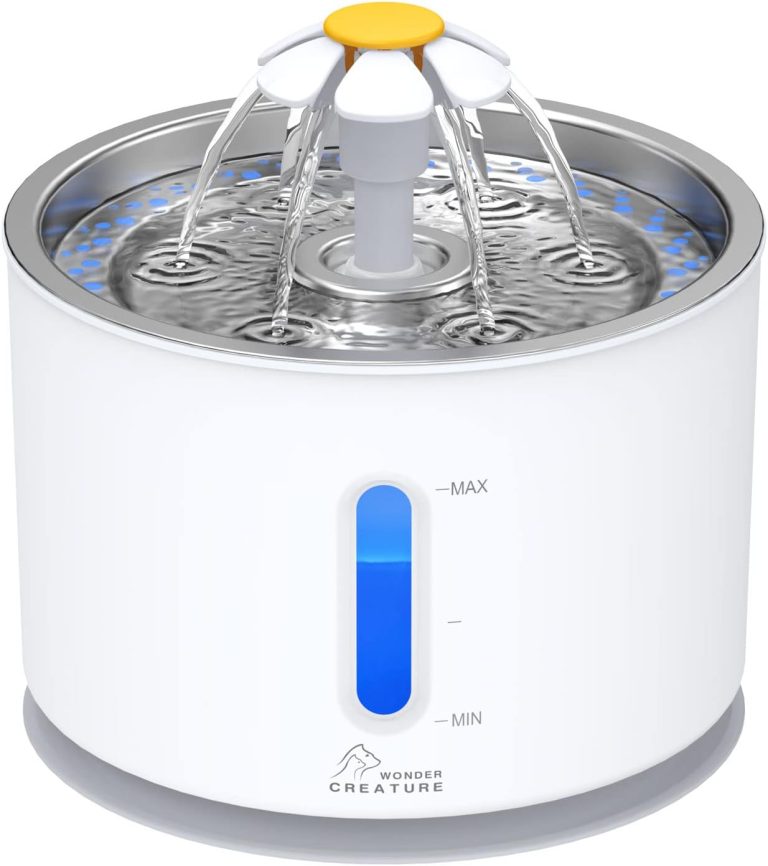
The fix: Top off the water daily. Many experts recommend filling the reservoir to the max line every morning. Cats are messy drinkers, and water evaporates faster than you think. Make it a habit and the gurgle disappears.
The “Clogged Pump” Whine
If the water level is fine but the motor sounds like a dying toy, you have a clog. Hair, litter dust, and slime get sucked into the impeller housing. This blocks the spinning magnet inside.
The fix: Unplug the fountain. Take the pump apart completely. You will see a small cover that holds the impeller. Pop it open, rinse out the gunk, and put it back. We found that a quick rinse under warm tap water fixes 9 out of 10 noisy pumps.
Dealing With Slime, Mold, and Biofilm
That slippery, pink or brown film on the fountain walls is biofilm. It is a colony of bacteria, and it loves warm, wet plastic. It looks gross because it is gross. The good news is that you can win this fight with routine.
We found that cleaning the fountain fully at least twice a week is the gold standard. The CDC points out that stagnant water and biofilms can harbor harmful bacteria. Moving water helps, but it does not stop the slime entirely.
The Deep Clean Routine
Do not just wipe the bowl. You have to take everything apart—every nook and cranny of the pump, the hose, the spout, and the filter housing.
- Disassemble the entire fountain down to the last piece.
- Scrub all plastic parts with a soft brush and warm soapy water.
- Use a cotton swab to clean the small pump inlet holes.
- Rinse every piece thoroughly. Soap residue is bad for cats.
- Soak the pump in a vinegar solution to break down scale.
- Replace the filter according to the manufacturer’s schedule.
Many cat owners skip the pump, but that is where the slime hides best. If you have a dishwasher, you can put most top-rack parts in there, but hand washing is gentler and more thorough.
Why Vinegar Works Better Than Bleach
Bleach residue is toxic for pets. Vinegar is safe, natural, and dissolves mineral buildup. We recommend a 1:1 mix of white vinegar and water. Soak the pump and plastic parts for 15 to 20 minutes. Then rinse everything until the vinegar smell fades.
Weak Water Flow or No Flow At All
You turn it on, and instead of a gentle stream, you get a pathetic trickle. Or nothing happens. This is frustrating, but it is rarely a dead pump. It is almost always a blockage or a tired motor.
The Impeller Jam
The impeller is a small magnetic rotor that spins to push water. Hair and debris wrap around it like a tumbleweed. This stops the spin entirely.
The fix: Open the pump chamber. Pull out the impeller. Rinse it off and wipe the shaft clean. Sometimes you need a toothpick to dislodge stubborn hair. This takes two minutes and solves most flow issues instantly.
Mineral Scale Build-Up
If you have hard water, you will get white crusty scale inside the pump. This scale makes the impeller stick to the walls. The motor tries to spin but cannot.
The fix: The vinegar soak we mentioned earlier works perfectly here. It dissolves the scale in minutes. After soaking, spin the impeller with your finger to make sure it moves freely before reassembling.
The Clogged Filter
Filters trap hair and dirt. That is their job. But when they get clogged, water flow drops drastically. Some filters look clean but are full of microscopic gunk.
The fix: Rinse the filter under running water every time you refill the fountain. Replace it every two to four weeks, depending on how much your cat sheds. A clogged filter puts extra strain on the pump and shortens its life.
Pump Stops Working Entirely
Okay, you cleaned everything, the impeller spins freely, and it still will not turn on. Do not panic. You probably do not need a whole new fountain.
The most common reason for complete pump failure is a burned-out motor. This happens when a pump runs dry for too long. When the water level drops, the pump overheats and the internal coil fails.
Another culprit is a blown fuse in the pump’s power adapter. Many fountains have a small inline fuse. If the pump suddenly died after a power surge or a splash of water, check that fuse first.
Replacement Pumps Are Cheap and Universal
Here is the secret we want you to know: you do not have to buy the same brand pump. Most fountains use standard-sized pumps. You can find generic replacements online for about fifteen dollars, often half the price of the branded one.
Before you buy, measure the pump. Check the height, width, and the water output tube diameter. Most pumps have a 3/8 inch or 5/16 inch outlet. You can also look for a model number printed on the pump casing.
How to Stop Fountains From Getting Dirty So Fast
You can slow down the slime and gunk buildup. It is all about the environment and the water you use.
- Use distilled or filtered water. Tap water brings in minerals that feed scale and biofilm. Many vets recommend filtered water for this reason.
- Place the fountain away from food bowls. Food particles and kibble dust get into the water fast.
- Keep it out of direct sunlight. Sunlight warms the water and encourages algae and bacteria growth.
- Choose the right size. A fountain that is too small gets depleted quickly, and the pump runs dry more often.
- Wash your hands before touching the pump. Lotions and oils on your hands add gunk to the water.
Understanding Different Fountain Materials
Not all fountains are created equal. The material affects how often you need to clean it. We compared the most common types to help you decide if you need to switch.
| Material | Pros | Cons |
|---|---|---|
| Plastic | Cheap and lightweight | Scratches easily; scratches harbor bacteria and lead to feline acne |
| Ceramic | Heavy, hard to tip, easy to clean | Can chip or break if dropped |
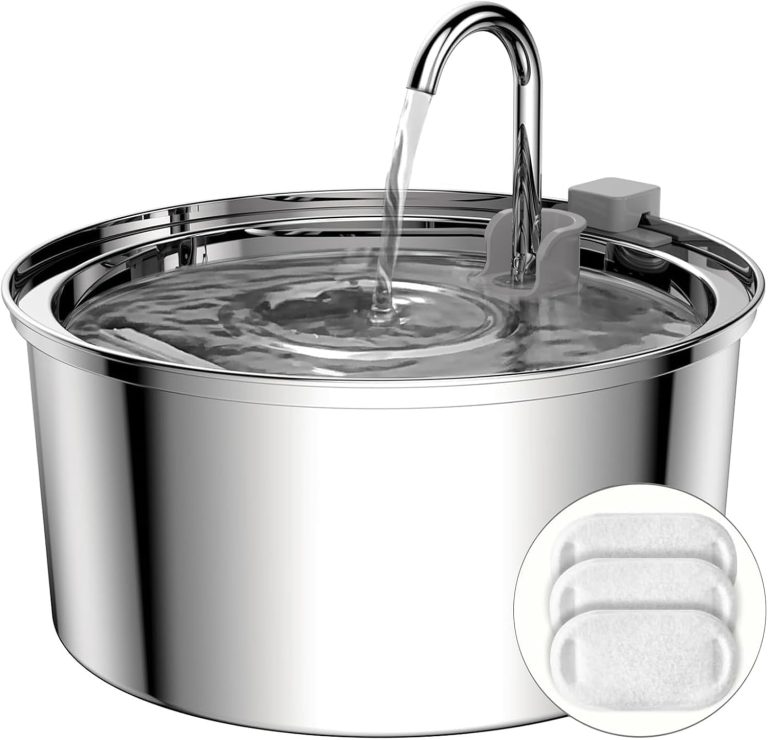
| Stainless Steel | Non-porous, very hygienic, durable | Shows water spots and fingerprints; some cats dislike the metallic taste or sound |
We found that stainless steel and ceramic are the easiest to keep clean. Plastic holds onto smells and gets microscratched quickly. If you have a cat with chin acne, switching away from plastic often clears it up right away.
Choosing the Right Size Pump for Your Fountain
Sometimes the issue is not the fountain—it is the pump being too weak or too strong for the bowl. If you replaced a pump and the flow is still bad, you might have the wrong size.
Fountain pumps are rated by gallons per hour (GPH). A large, multi-level fountain needs a higher GPH pump, around 60 to 100 GPH. A small single-bowl fountain only needs 25 to 50 GPH. If your pump is too small, the water barely reaches the top. If it is too big, it splashes and overflows.
You can adjust flow on many pumps. Look for a small dial or a sliding ring on the side of the pump. Twist it to reduce the flow. This helps if the stream is too aggressive and your cat refuses to drink.
The Weekly Maintenance Checklist
You do not need to be a handyman to keep your fountain running. Stick to this simple checklist and you will avoid almost every problem we listed above.
- Check the water level every morning and top it off.
- Wipe down the fountain surface daily to remove dust and hair.
- Rinse the filter with water every time you refill.
- Disassemble and scrub the fountain twice a week.
- Soak the pump in vinegar once a month for a deep clean.
- Replace the filter every two to four weeks.
This routine takes about ten minutes a week total. In exchange, you get a quiet, clean fountain that your cat actually wants to drink from. That is a fair trade. Your cat gets fresh water, and you get peace and quiet instead of that annoying hum.
Conclusion
Cat water fountain problems are frustrating, but you now have the playbook to fix nearly all of them. The biggest lesson is simple: most issues trace back to cleaning, water level, or a tired pump. You do not need to be handy to keep things running smoothly.
Start with the basics today. Check the water level and give the pump a quick rinse. That solves the majority of noise and flow complaints we see. If the pump finally gives out, remember that a cheap universal replacement works just as well as the brand-name part.
Make the weekly checklist part of your routine, and your fountain will stay quiet, clean, and appealing to your cat. Fresh water means a healthier, happier kitty—and a little more peace and quiet for you.
Frequently Asked Questions
How often should I change the filter in my cat water fountain?
You should replace the filter every two to four weeks. The exact timing depends on how much your cat sheds and how many animals use the fountain. Rinsing the filter under running water every few days helps it last longer and keeps the water flowing.
Why does my cat water fountain smell bad even after cleaning?
A lingering smell usually means bacteria is hiding in the pump or tubing. You need to disassemble the pump completely and soak all parts in a vinegar solution for 20 minutes. Do not forget the small rubber gaskets—they trap odor easily.
Can I put my cat water fountain parts in the dishwasher?
Most plastic and ceramic parts are top-rack dishwasher safe. Check your manual first to confirm. Stainless steel parts clean up fine in the dishwasher too, but hand washing is gentler on the pump and helps avoid soap residue that can upset your cat.
Why is my cat suddenly refusing to drink from the fountain?
Cats are picky about taste and smell. The pump or filter might be dirty, or the water might taste like plastic if the fountain is new. Try a thorough deep clean, switch to filtered water, and see if your cat comes back around.
Is it safe to leave a cat water fountain running all the time?
Yes, leaving it running 24/7 is perfectly safe and recommended. The moving water encourages your cat to drink more. Just make sure you top off the water daily so the pump never runs dry, which is the main cause of motor burnout.