How Self-Cleaning Cat Water Fountains Work: 2026 Guide
Yes, a self-cleaning cat water fountain uses filters, UV light, or automatic cleaning cycles to keep water fresh and reduce slime, hair, and bacteria buildup on its own. These fountains are designed to cut down the chore of scrubbing, but they still need occasional maintenance to work properly. You get fresher, cleaner water for your cat with far less daily effort.
We found that most cat owners struggle with slimy fountains and constantly changing filters. That is exactly why these newer models exist. They tackle the gross stuff for you, so your feline friend always has a clean drink. Many experts say a self-cleaning fountain is one of the smartest upgrades for your pet’s health and happiness.
- Self-cleaning fountains use UV-C light, filters, or rotating parts to fight bacteria and algae.
- They still require you to empty and wipe them down every 2 to 4 weeks.
- You will spend less time on daily cleaning, but not zero time on upkeep.
- Look for models with dishwasher-safe parts and easy-to-replace filters.
- These fountains are great for multi-cat homes or picky drinkers.
Below, we break down exactly how these fountains work, what to look for, and whether one is worth your money. Let’s walk through the details together so you can make the best choice for your cat.
Why Your Cat’s Water Bowl Gets Gross So Fast
You fill the bowl in the morning, and by dinner time, it looks like a science experiment. That slimy film? It is bacteria and biofilm. Those floating bits? Cat kibble dust, fur, and whatever your cat dragged in from the litter box.
Still water is a breeding ground for germs. Many pet owners do not realize that a regular bowl can harbor harmful bacteria like E. coli and salmonella (NCBI). Cats are also picky drinkers. If the water tastes stale or smells off, they will drink less. That can lead to dehydration and urinary tract issues.
That is why a moving water source helps. It keeps the water oxygenated and less inviting to bacteria. But even a standard fountain can get slimy if you do not scrub it constantly. That is exactly where a self-cleaning model steps in.
What Actually Makes a Fountain “Self-Cleaning”?
Not all self-cleaning fountains work the same way. We found that most use one of three main methods to fight grime. Some use a combination of them for better results.
Here is a quick breakdown of the tech you will see:
- UV-C light: This kills bacteria, viruses, and algae in the water as it passes through a chamber. It is the same type of light used in water purifiers.
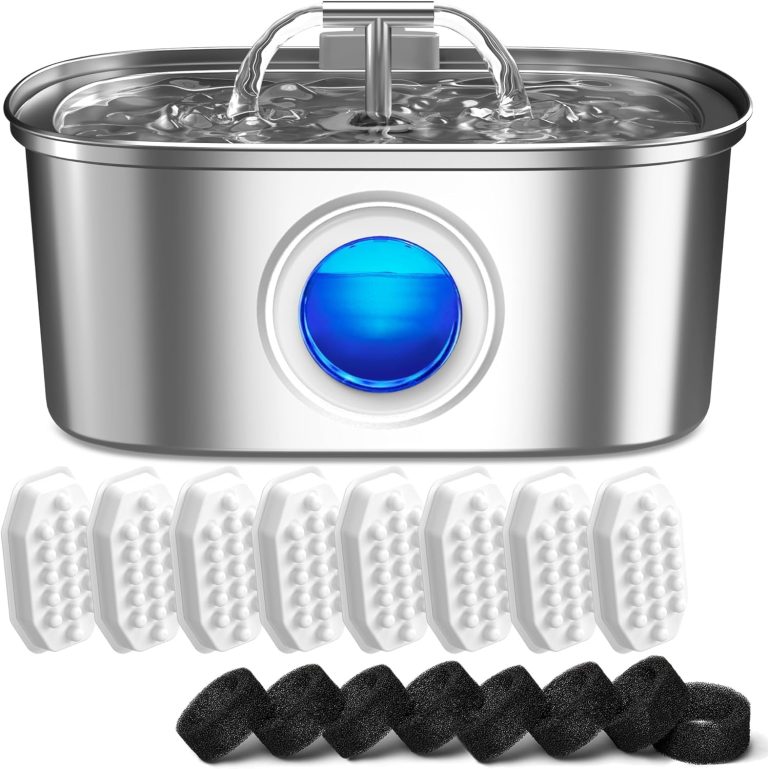
- Multi-stage filtration: A mechanical filter catches hair and debris. A carbon filter removes odors and bad tastes. An ion-exchange filter softens the water.
- Automatic cleaning cycles: Some fountains run a self-clean mode that flushes the lines and rinses the basin with fresh water on a timer.
Think of it like a dishwasher for your cat. You load it, press start, and the machine handles the dirty work. You still have to unload it and wipe down the edges, but the heavy lifting is done for you.
UV-C Light: The Germ Killer
UV-C light is a powerful tool in the fight against murky water. It damages the DNA of microorganisms, stopping them from reproducing. Many water treatment plants use the same technology to keep drinking water safe (CDC).
In a fountain, the water cycles past a small UV bulb. It does not zap the water like lightning. It gently sterilizes it as it flows. This is a huge win for cats who are prone to chin acne, which is often caused by bacteria on plastic bowls.
Just remember, the UV bulb is a consumable part. You will need to replace it every 6 to 12 months, depending on the brand. Check your manual so you know what to expect.
Filter Systems: More Than Just Charcoal
Filters are the workhorses of any fountain. They physically trap the junk you can see and absorb the stuff you cannot. A good filter will catch fur, dust, and food particles before they float back into the water stream.
We found that most self-cleaning models use a layered filter. The top layer is a fine mesh to catch big debris. The middle layer is activated carbon to remove odors. The bottom layer often contains an ion-exchange resin that helps reduce hard water scale.
You still have to replace these filters every 2 to 4 weeks. That is not a chore you can skip. A clogged filter stops the water flow and can burn out the pump. It is the one thing you must stay on top of, even with a “self-cleaning” fountain.
What to Look for When Buying a Self-Cleaning Fountain
Now that you know how they work, how do you pick the right one? We compared dozens of models and found that a few key features make a big difference in your daily life. Do not just grab the cheapest one on the shelf. Look for these five things first.
Check the Water Capacity and Pump Noise
How many cats do you have? A single cat might be fine with a 60-ounce fountain. But if you have a multi-cat household, you need something bigger. Look for a capacity of at least 80 ounces if you have two or more cats. Otherwise, you will be refilling it constantly.
Noise matters more than you think. A loud, humming pump can scare a nervous cat away. Look for pumps rated under 40 decibels. That is about the sound of a quiet library. Some premium models even have a “silent night mode” that lowers the pump speed while everyone sleeps.
Look for Dishwasher-Safe Parts
Even with automatic cleaning, you will need to do a deep clean occasionally. That is much easier if the parts are dishwasher-safe. Look for models made of stainless steel or BPA-free plastic that can handle the heat of a dishwasher cycle.
Avoid fountains with lots of tiny crevices. Those are impossible to scrub by hand. The best designs have smooth, rounded surfaces and a wide opening so you can reach the pump compartment easily. If you can see the pump, you can clean it.
Consider the Maintenance Cost
Self-cleaning fountains are not a one-time purchase. You will be buying filters and UV bulbs regularly. Before you buy, check the price of replacement parts. Some brands charge a fortune for proprietary filters.
We found that the average cost is about $10 to $15 per month for filters and bulbs. That adds up to $120 to $180 a year. Make sure that fits your budget. It is a small price to pay for your cat’s health, but it is still a recurring cost you should plan for.
Safety Features Are Non-Negotiable
Water and electricity do not mix. Look for a fountain with a low-voltage pump. This is much safer if your cat chews the cord or knocks the fountain over. Also, check for a cord cover or a way to hide the cord completely.
Some models have an auto shut-off sensor. If the water runs too low, the pump turns off instead of burning out. This protects the machine and prevents a fire hazard. It is a small feature that can save you a lot of money in the long run.
How to Set Up and Maintain Your New Fountain
So, you bought a fountain. Now what? Setting it up is usually simple. Rinse all the parts, fill the tank, and plug it in. But there are a few steps you should not skip to make sure it works right.
First, always run the pump in a bowl of clean water for a few minutes before assembling. This flushes out any manufacturing dust. Then, fill the tank to the marked line. Do not overfill, or the water will splash out of the spout.
The 2-4 Week Deep Clean Routine
Even the best self-cleaning fountain needs a human touch. We recommend a full teardown every 2 to 4 weeks. This is not about scrubbing slime. It is about resetting the system so the automatic features can do their job.
Here is the checklist we follow:
- Unplug the fountain and disassemble every part.
- Rinse the pump under running water to remove debris from the impeller.
- Soak the basin and spout in a vinegar-and-water solution (1:3 ratio) for 15 minutes.
- Scrub the reservoir with a soft sponge to remove any film.
- Replace the filter and UV bulb if they are due for a swap.
- Rinse everything thoroughly with clean water before reassembling.
This routine takes about 10 minutes. It keeps the fountain running smoothly and the water tasting fresh. Think of it like changing the oil in your car. You cannot skip it, but it is quick.
Water Quality and Your Cat’s Health
The water you use matters. Tap water is fine for most cats, but if you have hard water, you will get scale buildup on the pump. That white crust can clog the mechanism and reduce water flow.
Many experts say filtered or distilled water is better for the fountain’s longevity. It also prevents your cat from ingesting extra minerals. If your cat has a history of urinary crystals, talk to your vet about the best water source (Cornell University College of Veterinary Medicine).
Also, keep the fountain out of direct sunlight. Sunlight promotes algae growth. Even with a UV light, a sunny window spot can cause green slime to form on the basin. A cool, shady corner is always the best location.
Are Self-Cleaning Fountains Worth the Money?
Let’s be real. These fountains are not cheap. Good ones run anywhere from $60 to $150. That is a lot more than a $5 ceramic bowl. So, is it worth it?
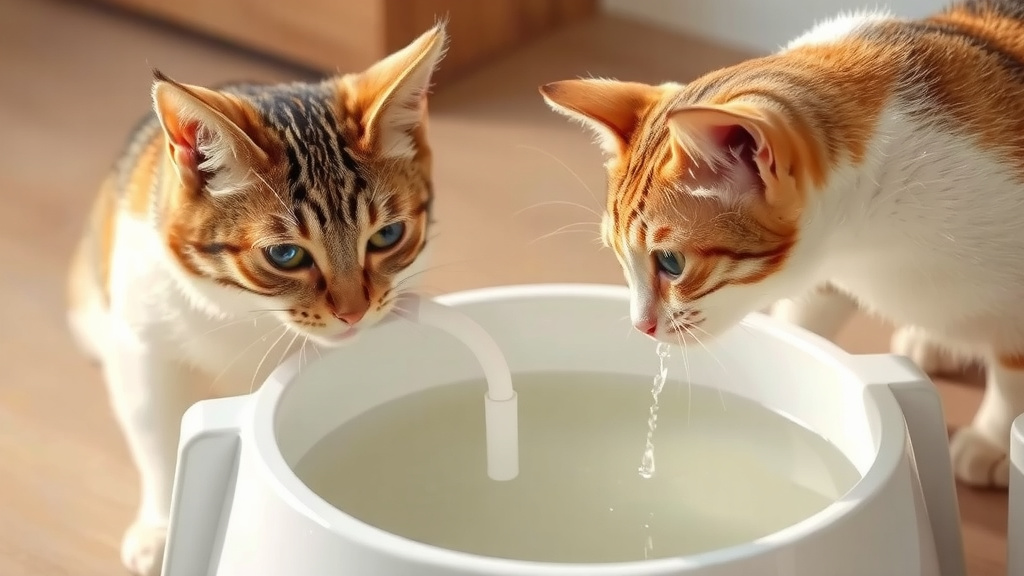
We found that the answer is yes for most owners. The main benefit is not just convenience. It is your cat’s health. A constantly moving, filtered water source encourages cats to drink more. Increased water intake reduces the risk of kidney disease and urinary tract infections, which are common in cats (NIH).
You also save time. Instead of scrubbing a bowl every single day, you do a 10-minute deep clean every few weeks. That is a huge win for busy pet parents.
Who Should Skip the Self-Cleaning Fountain?
These fountains are not for everyone. If you have a cat that loves to splash water everywhere, you might be mopping the floor more often. Some cats are also scared of the sound of the motor, even a quiet one.
If you are not willing to change filters and bulbs regularly, skip this. A neglected fountain is worse than a clean bowl. It will grow mold in the filter and harbor bacteria. You have to be committed to the maintenance schedule.
For everyone else, the upgrade is life-changing. Your cat gets fresher water, and you get your evenings back. It is a win-win for the whole household.
Comparing Top Styles of Self-Cleaning Fountains
Not all fountains look the same. We found that the design affects how easy they are to maintain. Here is a quick comparison of the three most popular styles we looked at:
| Style | Best For | Maintenance Level | Key Trade-Off |
|---|---|---|---|
| Stainless Steel | Cats with chin acne | Low | Heavier and more expensive |
| Plastic with UV-C | Budget buyers | Medium | Plastic can scratch and hold smells |
| Ceramic | Heavy splashers | High | Heavy to lift and easy to chip |
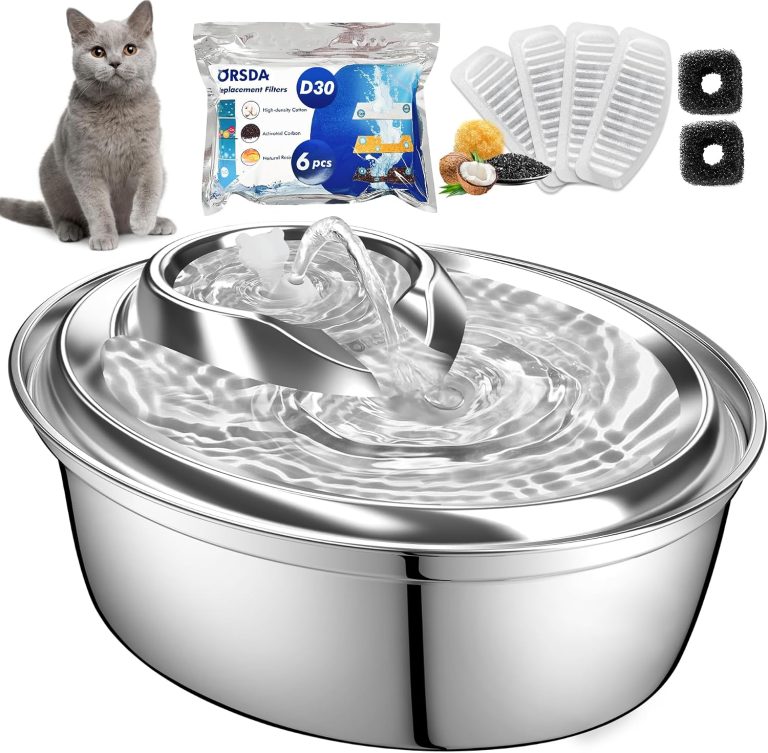
Stainless steel is the clear winner for hygiene. It does not scratch as easily as plastic, so bacteria have fewer places to hide. It is also more durable and looks nicer on your counter. If you can afford it, we recommend going with a stainless steel model with a UV light.
The Real-World Cost Breakdown
Let’s do the math. A mid-range fountain costs about $80. Replacement filters cost $15 per month. A new UV bulb costs $20 every six months. That is roughly $230 in the first year.
Compare that to the cost of a vet visit for a urinary blockage, which can easily run $1,500 or more. The fountain pays for itself the first time it prevents a health scare. That is the best kind of insurance for your furry friend.
We also found that many owners report their cats drink noticeably more water within the first week. That is the single best sign that the fountain is working. A hydrated cat is a happy cat.
Getting Your Cat Used to the New Fountain
Switching from a bowl to a fountain is not always seamless. Some cats are curious and will start drinking immediately. Others will stare at it like it is an alien spaceship. Do not panic. This is normal.
Start by placing the fountain next to their old bowl. Let them investigate it while it is off. Once they seem comfortable, turn it on. If they are scared of the moving water, you can place a few treats around the base to create a positive association.
Troubleshooting Common First-Week Problems
We found that most cats adjust within a few days. But if your cat is stubborn, here are a few tricks. If they will not drink from the fountain, try a model with a very low water level and a gentle flow. Some cats hate getting their whiskers wet.
If the pump is too loud, place a small towel or rubber mat under
Conclusion
You do not need to scrub a slimy fountain every day to keep your cat healthy. A self-cleaning cat water fountain does the heavy lifting with UV light, filters, and automatic rinse cycles. The technology is smart, but it still needs your help every few weeks. Change the filter, wipe down the basin, and replace the UV bulb on schedule. That small routine keeps the system working at its best.
The upfront cost is real, but the payoff is fresher water and a happier, more hydrated cat. You will save time and money compared to a preventable vet visit. Start with a stainless steel model with UV-C light and dishwasher-safe parts. Your cat will thank you with more trips to the water bowl.
Frequently Asked Questions
How often do you need to clean a self-cleaning cat water fountain?
You still need to do a full teardown every 2 to 4 weeks. The self-cleaning cycle handles daily grime, but it cannot scrub the pump or reach every crevice. A quick vinegar soak and rinse keeps the system running smoothly. Do not skip this step, or the filter will clog.
Is a self-cleaning fountain safe for kittens?
Yes, most models are safe for kittens over 8 weeks old. Look for a low-voltage pump and a gentle flow setting. Start with the fountain turned off so your kitten can investigate it first. Supervise the first few uses to make sure they do not try to bathe in it.
Can you leave a self-cleaning cat fountain on all the time?
Yes, you can leave it running 24/7, and most models are designed for that. The constant water movement keeps it oxygenated and fresh. Just check the water level daily and top it off as needed. If the pump runs dry, it can burn out quickly.
Why is my cat not drinking from the new fountain?
Some cats are cautious about new sounds and moving water. Place the fountain next to their old bowl for a few days. You can also try a model with a lower water level and a quieter pump. Most cats adjust within a week once they realize the water tastes better.
Do self-cleaning fountains work with hard water?
They work, but hard water can cause scale buildup on the pump and basin. Use filtered or distilled water to reduce mineral deposits. You will also need to clean the fountain more often if your tap water is very hard. A vinegar soak every 2 weeks helps break down that white crust.