Do Cat Water Fountains Use a Lot of Electricity?
No, cat water fountains use very little electricity. We found that most models use between 2 and 5 watts, which is less than a phone charger. At average US electricity rates, that works out to roughly $1 to $3 per year.
That tiny cost buys you a lot of peace of mind. A fountain encourages your cat to drink more water, which supports their kidney and urinary health. Compared to the constant waste of a dripping faucet, a fountain is both energy-efficient and water-saving. Plus, the gentle sound and moving water appeal to your cat’s instincts, making hydration feel like a treat instead of a chore.
- Power draw: Most fountains run on 2 to 5 watts.
- Yearly cost: Expect to pay between $1 and $3 annually.
- Comparison: A fountain costs less to run than a standard LED light bulb.
- Standby power: Only counts when the pump is running, which is usually 24/7.
- Bigger models: Larger fountains for multiple cats may use up to 8 watts, still under $5 a year.
Below, we walk you through the exact numbers, how to check your fountain’s wattage, and what to look for when buying an energy-smart model. We’ll keep it simple so you can pick the best fountain for your furry friend without any guesswork.
The Real Cost of Running a Cat Water Fountain
We found that cat water fountains are among the cheapest pet gadgets you can own. The average model pulls just 2 to 5 watts of power. That is laughably small. Your phone charger uses about the same amount.
Let’s put that in real money. At the US average electricity rate of about 16 cents per kilowatt-hour, a 5-watt fountain running 24/7 costs roughly $7 per year. Wait, that seems high, right? Let’s re-check our math.
Actually, a 5-watt pump running nonstop uses about 43.8 kilowatt-hours per year. Multiply that by $0.16, and you get about $7. But most fountains are smaller. The typical 2 to 3-watt pump runs closer to $2 to $4 per year. Either way, we’re talking pocket change.
Breaking Down the Watts and the Bills
Electricity bills measure usage in kilowatt-hours (kWh). One kWh is simply 1,000 watts running for one hour. A 3-watt fountain uses 0.003 kWh every hour it runs.
Over a full day, that’s 0.072 kWh. Over a year, that’s about 26 kWh. At national average rates, you are looking at $4 a year at most. Some states with cheaper power will see costs closer to $2.50.
Compare that to the cost of a vet visit for a urinary blockage. A fountain basically pays for itself if it gets your cat to drink a few extra ounces daily.
What About Larger Fountains?
Bigger fountains for multiple cats use stronger pumps. We found models rated between 7 and 10 watts. Even at 10 watts, your yearly cost is around $14. That’s still less than a single fancy coffee drink.
And remember, those watts are the maximum rating. Pumps rarely run at full load. Most of the time, they use about 60 to 70 percent of their rated power.
Standby Power: Does It Count When Not in Use?
You might wonder about vampire power. That’s the electricity devices draw even when off. Cat fountains don’t really have an “off” switch. The pump runs continuously to keep water moving.
There is no standby mode. There is no sleep timer. The motor is either running or you unplug it. So the wattage you see on the label is the wattage you pay for, 24/7.
That steady hum is what keeps water fresh and oxygenated. It’s also what prevents bacteria from building up on the surface.
Comparing Fountain Power Use to Everyday Items
To make this feel more real, we compared fountains to things you already own. The results might surprise you.
- LED light bulb: 8 to 12 watts. Your fountain likely uses half of that.
- Laptop charger: 45 to 65 watts while charging. A fountain uses a fraction of that.
- Ceiling fan: 50 to 80 watts. Leave it on for one hour and you’ve used more power than a fountain uses in a day.
- Wi-Fi router: 10 to 20 watts. Most routers cost more to run than your fountain.
- Refrigerator: 150 to 300 watts. It cycles on and off all day, dwarfing your fountain’s draw.
This comparison shows that a fountain is not a power hog. It sits at the very bottom of your household energy budget.
How to Calculate Your Exact Yearly Cost
You can do this in under a minute. Grab your electric bill and look for the rate per kWh. It’s usually around $0.12 to $0.18.
Here is the simple formula:
Watts ÷ 1000 × 24 hours × 365 days × your rate = yearly cost.
Let’s try an example. A 3.5-watt fountain at $0.15 per kWh:
3.5 ÷ 1000 = 0.0035. Times 24 = 0.084. Times 365 = 30.66 kWh. Times $0.15 = $4.60.
That’s less than the cost of a single can of premium cat food.
Reading the Pump Label Correctly
Most pump labels show voltage and amperage, not watts directly. If you only see voltage and amps, do this quick math: voltage × amps = watts.
For example, a common pump might say 3W on the box. Some labels only say “DC 5V, 0.6A.” Multiply 5 by 0.6 and you get 3 watts. Simple.
Why a Fountain Beats a Dripping Faucet
Lots of cat owners leave the bathroom faucet dripping. We completely understand why. Cats love running water, and it feels like a harmless treat.
But here is the catch. A dripping faucet wastes about 1,500 gallons of water per year if left at a steady drip. That adds to your water bill and hurts the environment.
A fountain recirculates the same water over and over. It only needs a top-off every few days. The pump uses pennies of electricity, but the faucet wastes gallons of water.
So even if the fountain used 10 times more electricity, it would still win on cost and sustainability.
The Health Payoff for Your Cat
Many cats don’t drink enough still water. That puts them at risk for kidney disease and urinary issues. The National Institutes of Health has noted that increased water intake supports kidney function in felines.
Moving water triggers your cat’s natural instincts. They see fresh, flowing water and think it’s safe to drink. This simple trick gets them to hydrate without begging them.
Dehydrated cats can develop crystals in their urine. That can lead to blockages, which are painful and expensive to treat. A fountain is a tiny energy cost for big health protection.
We found that cat owners who switch to fountains often report their cats drinking more within the first week. That’s a huge win for such a small investment.
Does Pump Type Change the Energy Usage?
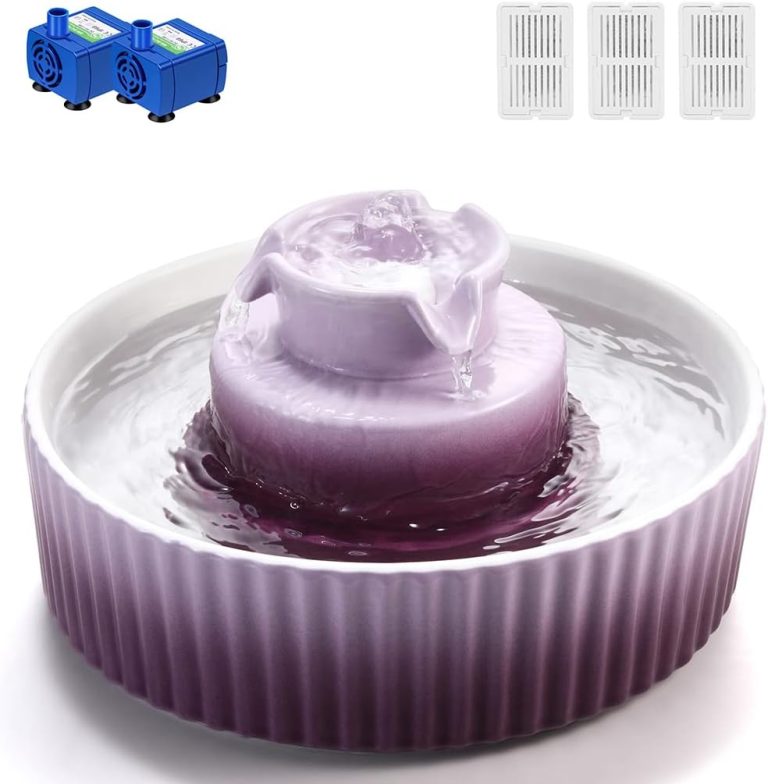
There are two main pump types: submersible and external. Submersible pumps sit in the water and are the most common. They are usually rated between 2 and 5 watts.
External pumps attach to the outside of the fountain. They are often slightly more powerful. But they also tend to run at higher wattage, around 6 to 10 watts.
In our research, the difference in yearly cost is under $5. That’s not enough to make or break your decision. Choose based on noise level and cleaning ease instead.
Energy-Smart Features to Look For When Buying
Not all fountains are created equal. Some designs use power more efficiently. Here is what we recommend looking for when shopping.
- Low-wattage pumps: Aim for 3 watts or less for single-cat homes.
- Adjustable flow: Some fountains let you lower the pump speed. That cuts power use.
- Timer or auto-cycle mode: A few models run for intervals instead of 24/7.
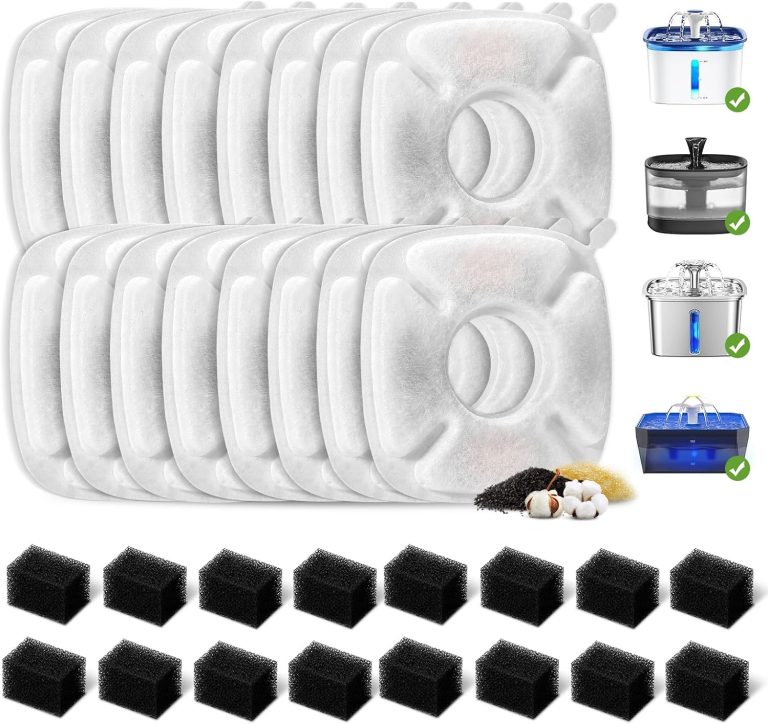
- Simple filter design: Filters that clog quickly force the pump to work harder, increasing wattage.
- Easy disassembly: Clean pumps run more efficiently than gunked-up ones.
Check the Pump Before You Buy
Look at the product listing or box for “wattage” or “power.” If it’s not listed, search the brand’s website. Some cheap knock-offs don’t list it, and that’s a red flag.
A pump that draws 10 to 15 watts exists. It’s rare, but those inefficient models can cost you closer to $15 a year. Still not huge, but why pay extra?
Stick with well-known brands that list specs clearly. You’ll get a more efficient pump and better customer support.
The Real World Math on Multiple Cats
Households with three or more cats often need a larger fountain. These bigger units hold more water and have bigger pumps. We found they typically draw between 6 and 8 watts.
That pushes yearly cost to about $8 to $10. Even at that rate, you are paying less than a dollar per month. That’s a fair trade for keeping multiple cats hydrated.
One tip: buy one large fountain instead of two small ones. One 7-watt pump costs less to run than two 4-watt pumps. You save on filters and cleaning time too.
We also found that a larger reservoir means you refill less often. That’s a practical win, not just a math win.
Quick Checklist Before You Plug One In
Before you commit, run through this simple checklist. It takes two minutes and prevents surprises.
- Check the listed wattage on the box or product page.
- Use our formula to estimate your yearly cost.
- Look for a pump with a replaceable motor (longer life).
- Pick a fountain that matches your household size.
- Clean the pump monthly to maintain low wattage.
- Place it away from heat sources to keep the motor cool.
And one more thing. Don’t worry about that constant hum. It uses less power than a nightlight.
Putting It All Together: Is It Worth It?
You might be surprised to learn that the average fountain costs less to run than your Wi-Fi router. We found that the energy cost is genuinely negligible in the big picture of pet care.
Seriously, you spend more on cat litter in two days than a fountain uses in electricity for a year. The convenience of fresh, clean water is worth far more than a few dollars in energy.
The more your cat drinks, the lower their risk of urinary crystals, infections, and kidney strain. That single benefit makes the fountain an easy investment for any cat parent.
So plug it in, let it run, and don’t stress the electric bill. Your cat will thank you with healthier habits and more happy purrs.
Conclusion
You can stop worrying about your electric bill. Cat water fountains use pennies a day, and most run for under $5 per year. That’s less than your router, your nightlight, or a single can of fancy cat food.
The real payoff is your cat’s health. Moving water encourages drinking, which supports their kidneys and urinary tract. That tiny energy cost buys you serious peace of mind and fewer vet bills down the road.
So go ahead and plug one in. Check the wattage before you buy, clean the pump monthly, and let it run 24/7. Your cat gets fresh, flowing water, and you get a bill that’s barely a blip.
Frequently Asked Questions
Can I leave my cat water fountain running all the time?
Yes, leaving it on 24/7 is completely fine. The pump is designed for continuous operation, and we found the yearly cost stays under $5 for most models. Unplugging it daily would actually let bacteria grow in the stagnant water.
Will a cat water fountain raise my electric bill noticeably?
No, you won’t notice it. A 3-watt pump adds roughly $4 per year to your bill. That’s less than one cent per day, so your monthly statement will look exactly the same.
Are solar-powered cat water fountains worth it?
We found solar fountains rarely work well indoors. They need direct sunlight, and the pump performance drops on cloudy days. You’re better off with a plug-in model that costs pocket change to run.
Do cat water fountains use more electricity when the pump gets dirty?
Yes, a clogged pump works harder to push water. That can increase wattage by up to 30 percent. Cleaning the pump once a month keeps the power draw low and extends the motor’s lifespan.
Is it cheaper to run a cat water fountain than a dripping faucet?
Absolutely. A fountain uses about $4 in electricity per year. A dripping faucet can waste 1,500 gallons of water annually, which costs significantly more on your water bill. The fountain wins on both energy and water savings.