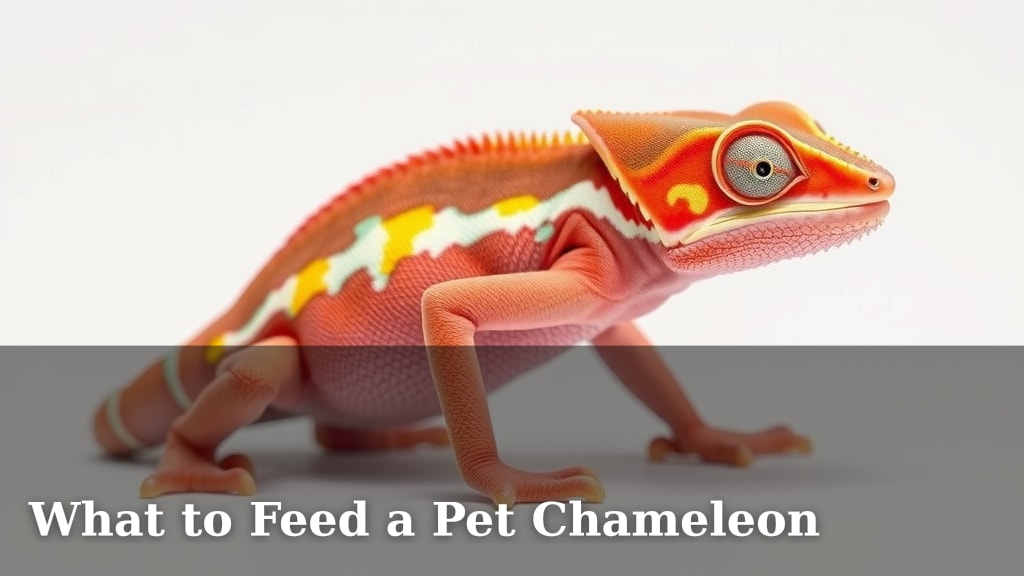
What to Feed a Pet Chameleon
Feeding your pet chameleon the right food is key to their health and happiness. You should primarily feed your chameleon live insects that are properly sized and gut-loaded. Common chameleon foods include crickets, roaches, and mealworms, but variety is important for a balanced diet.
Just like us, chameleons need a diverse menu to get all their vitamins and minerals. Offering a variety of insect types helps ensure they receive essential nutrients. It’s also crucial to dust their food with calcium and vitamin supplements regularly, especially for young, growing chameleons.
TL;DR:
- Feed live insects like crickets, roaches, and mealworms.
- Ensure insects are the right size for your chameleon.
- Gut-load insects before feeding them to your pet.
- Dust insects with calcium and vitamin supplements.
- Offer a variety of insect types for a balanced diet.
Ready to learn more about keeping your chameleon well-fed and thriving? Let’s get into the details about the best food options for your scaly friend.
Nourishing Your Chameleon: A Guide to What They Eat
Keeping your chameleon healthy means feeding them the right things. You’re aiming for a diet that mimics what they’d eat in the wild. This primarily means offering a variety of live insects. Think of it like giving your chameleon a diverse buffet. This ensures they get all the nutrients they need to thrive and stay vibrant.
The Foundation: Live Insects as Staple Foods
Live insects are the absolute cornerstone of your chameleon’s diet. They provide essential protein and the necessary stimulation for your chameleon’s hunting instincts. It’s important to select insects that are the right size for your specific chameleon species and age. A good rule of thumb is that the insect should be no longer than the width of your chameleon’s head. Feeding insects that are too large can cause health problems.
Popular and Healthy Insect Choices
When stocking your chameleon’s pantry, several insect options stand out as excellent choices. These are readily available and packed with nutrition. Always ensure they are sourced from a reputable supplier to avoid introducing pesticides or diseases into your pet’s diet.
Crickets: The Everyday Staple
Crickets are often considered the go-to food for many chameleon owners. They are nutritious and widely available. House crickets and banded crickets are common choices. They are a good source of protein and are generally well-accepted by chameleons. Just remember to gut-load them beforehand for maximum benefit.
Roaches: A Nutrient-Rich Option
Various types of roaches make fantastic chameleon food. Dubia roaches are particularly popular among reptile enthusiasts. They are known for their excellent nutritional profile, being high in protein and calcium. They are also less likely to bite your chameleon and are relatively easy to care for if you plan to breed them yourself. Other safe options include Turkestan roaches and Red Runner roaches.
Other Insect Treats: Variety is Key
While crickets and roaches can form the bulk of the diet, offering other insects adds important variety. Mealworms and superworms are nutritious but should be given in moderation due to their higher fat content and chitin. Black soldier fly larvae (BSFL), also known as phoenix worms or Calci-worms, are another excellent choice. They are high in calcium naturally, which reduces the need for heavy supplementation for that specific feeding.
The Importance of Gut-Loading
Simply feeding insects isn’t enough. You need to ensure those insects are packed with nutrients before they become your chameleon’s meal. This process is called **gut-loading**. It means feeding the insects a nutritious diet for at least 24-48 hours before offering them to your chameleon. This nutritional boost passes directly to your pet. Think of it as preparing a healthy meal for your chameleon by first feeding their food a healthy meal.
What to Feed Your Feeder Insects
What should you feed your feeder insects? A good gut-loading diet often includes commercial gut-load formulas, which are specifically designed for this purpose. You can also use a mix of fresh vegetables and fruits. Good options include dark leafy greens like collard greens, mustard greens, and romaine lettuce. Sweet potatoes, carrots, and apples are also suitable. Avoid feeding insects citrus fruits or anything processed, as this can harm them and, in turn, your chameleon.
Supplementation: Essential Vitamins and Minerals
Even with a varied diet of gut-loaded insects, you likely won’t meet all your chameleon’s nutritional needs without supplementation. Reptiles, especially chameleons, have specific requirements for certain vitamins and minerals, particularly calcium and Vitamin D3. These are vital for bone health, preventing metabolic bone disease, and overall well-being.
Calcium and Vitamin D3: The Dynamic Duo
Calcium is essential for strong bones and proper nerve function. Vitamin D3 is necessary for your chameleon to absorb calcium from their food. Without adequate Vitamin D3, even a calcium-rich diet is useless. The best way to provide this is through commercially available reptile vitamin and mineral powders. Many experts recommend dusting insects with a calcium powder (without D3) five to six times a week, and a calcium powder with D3 one to two times a week.
How to Properly Dust Insects
Dusting insects is straightforward. Place the live insects in a plastic bag or container with the appropriate supplement powder. Gently shake the bag or container until the insects are lightly coated. Then, immediately offer these dusted insects to your chameleon. Over-dusting can be harmful, so a light coating is all that’s needed. Young, growing chameleons and breeding females typically require more frequent supplementation than adult males.
Multivitamin Supplements: A Weekly Boost
In addition to calcium, a good reptile multivitamin that contains Vitamin A is important. This should be used less frequently than calcium, typically only once or twice a week. Many owners find a good balance by using a calcium-plus-D3 powder a couple of times a week and a full multivitamin powder once a week, with plain calcium on other days. Always research the specific needs of your chameleon species, as recommendations can vary.
Water: Hydration for Your Chameleon
While we’re talking about food, don’t forget about water! Chameleons don’t typically drink from standing water bowls. They are adapted to get water from dew drops and moisture on leaves in their natural habitat. The best way to provide water is by misting their enclosure thoroughly several times a day. You can also use a dripper system that slowly drips water onto leaves, mimicking natural dew. Ensure your chameleon has access to fresh water at all times.
What NOT to Feed Your Chameleon
It’s just as important to know what to avoid feeding your chameleon as it is to know what to feed them. Many common “human” foods are toxic or nutritionally inappropriate for chameleons. Never feed your chameleon:
- Prey items that are wild-caught (they can carry parasites or pesticides).
- Insects that are brightly colored or fuzzy (many are poisonous).
- Lettuce or spinach regularly (they contain oxalates that can interfere with calcium absorption).
- Any type of rodent or meat.
- Commercial reptile food not specifically formulated for chameleons.
- Avocado, chocolate, or caffeine (toxic).
Always double-check if an insect is safe before offering it. When in doubt, leave it out. Your chameleon’s health is in your hands, and a well-researched diet is the best way to ensure they live a long, happy life.
Feeding Checklist for Your Chameleon’s Health
To make sure you’re providing the best nutrition, keep this simple checklist in mind:
- Offer live insects daily.
- Ensure insects are appropriately sized.
- Gut-load insects 24-48 hours before feeding.
- Dust insects with calcium and vitamins as recommended.
- Provide fresh water through misting or drippers.
- Avoid feeding any unsafe or inappropriate food items.
Conclusion
You’ve learned that a healthy chameleon diet is all about providing live, appropriately sized insects that are gut-loaded and supplemented. Variety in insect types, combined with the right calcium and vitamin dusting, forms the backbone of good nutrition. Don’t forget about hydration through misting!
By focusing on these key elements, you’re setting your chameleon up for a long, vibrant life. Now, take a moment to review your current feeding routine and make any necessary adjustments. Your pet’s well-being is in your capable hands!
Frequently Asked Questions
How often should I feed my chameleon?
Young, growing chameleons usually need to be fed daily. Adult chameleons can be fed every other day. It’s important to observe your chameleon’s appetite and adjust feeding frequency as needed, ensuring they remain at a healthy weight.
What are the best gut-loading foods for feeder insects?
You can use commercial gut-load formulas, which are specifically designed for this purpose. Fresh vegetables like collard greens, carrots, and sweet potatoes, along with some fruits like apples, are also excellent choices for feeding your feeder insects before they feed your chameleon.
Can I feed my chameleon fruit?
Chameleons are primarily insectivores, meaning their diet should be based on insects. While some fruits can be offered as a very rare treat in tiny amounts, they should not be a regular part of the diet. Too much fruit can lead to digestive issues or nutritional imbalances.
Why is Vitamin D3 important for my chameleon?
Vitamin D3 is essential because it allows your chameleon to properly absorb calcium from the food they eat. Without enough Vitamin D3, calcium supplementation won’t be effective, potentially leading to serious health problems like metabolic bone disease.
Are mealworms and superworms safe to feed my chameleon?
Mealworms and superworms can be fed to chameleons, but they should be given in moderation. These insects are higher in fat and chitin compared to crickets or roaches. Always ensure they are appropriately sized and gut-loaded before feeding them to your pet.