Cat Water Fountain Filter: When to Replace
You should replace your cat water fountain filter every 2 to 4 weeks for the best results. This keeps the water fresh and free of debris for your feline friend. We found that most manufacturers stick to this exact timeline, so checking your manual is a smart first step.
The filter works hard to trap hair, dust, and food particles. As it gets clogged, it can’t do its job, and bacteria can start to grow. Regular replacement protects your cat’s health and keeps the fountain pump running smoothly for years.
- Change the filter every 2-4 weeks – this is the universal sweet spot for most brands.
- Always rinse the new filter under cold water for a minute before installing it to activate the charcoal.
- Clean the fountain bowl and pump every week to reduce slime and keep the filter lasting longer.
- If you have multiple cats, lean toward the 2-week mark since the filter will get dirtier faster.
- Watch for a slower water flow – that’s a clear sign your filter is overdue for a swap.
Below, we break down the exact steps for figuring out your specific schedule, plus the signs that your filter needs changing right now. Let’s walk through this together so you can keep that water flowing clean and fresh for your kitty.
Figuring Out the Right Filter Replacement Schedule
Your cat’s fountain filter has a life span. Most brands agree on a 2 to 4 week window. But the exact spot inside that window depends on a few things you control.
We found that checking your fountain’s manual first is the smartest move. Manufacturers test their filters with their own pumps and bowls. They know when the material stops working well. Their recommendation is your best baseline.
Why the 2-Week Mark Matters for Multi-Cat Homes
Got more than one furry drinker? Then you are looking at the shorter end of that range. More cats mean more drool, more hair, and more crumbs landing in the water. The filter works overtime to catch all of it.
We suggest swapping the filter every 14 days if you have two or more cats. Watch how cloudy the water gets around day 10. If it looks even slightly off, do the swap early. Your cats will thank you by drinking more.
Single Cat Households Can Stretch It Closer to 4 Weeks
One cat with a clean diet and no dental issues? You might get the full month out of a filter. But that only works if you are also cleaning the bowl weekly. A filter cannot fix a dirty basin on its own. It simply strains the water as it passes through.
Many experts say that water quality changes faster than you think. Even with one cat, check the filter at week three. Hold it up to the light. If you see dark clumps or a slimy film, it is time to change it early.
What Happens Inside a Cat Water Fountain Filter
Filters are not magic. They are layers of material doing different jobs. Understanding that helps you see why timing matters so much.
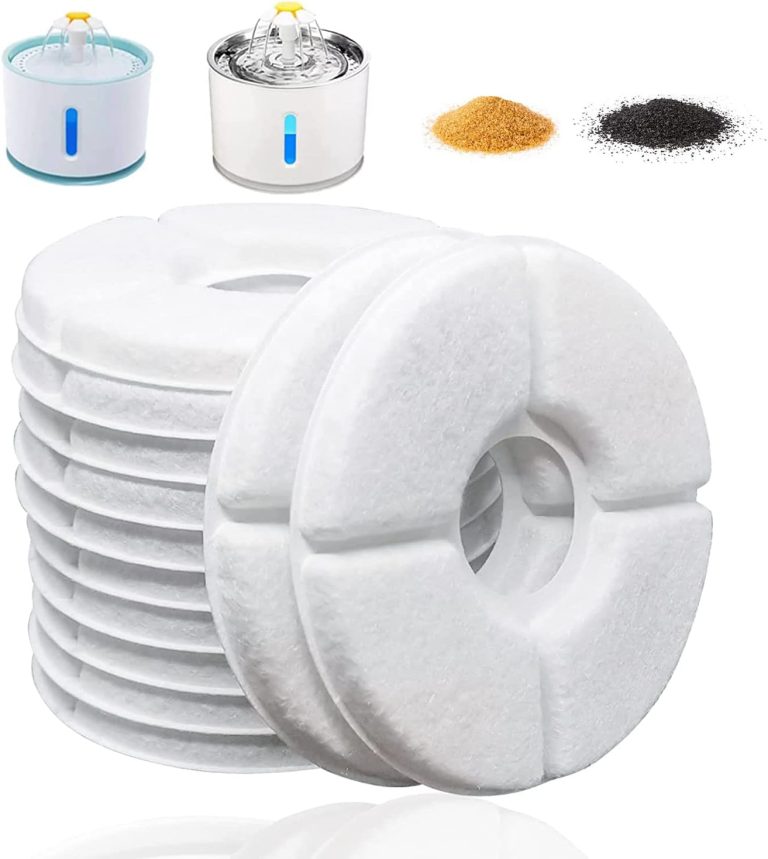
The outer layer traps fur and dust. The middle layer, usually activated carbon, pulls out odors and bad tastes. Some filters also have ion-exchange resin to soften the water. Every layer has a limit.
The Activated Carbon Clock Is Ticking
Activated carbon works like a sponge for chemicals and smells. But once it is full, it stops absorbing. It just sits there soaked. At that point, the filter is no longer helping your water. It might even become a home for bacteria.
Research and found that carbon loses most of its adsorption power after a few weeks of constant water flow. That matches the 2 to 4 week recommendation from most brands. If you push it past a month, you are basically running an unfiltered fountain.
Signs Your Carbon Layer Is Done
- Water starts smelling like stale tap water
- A strange musty odor comes from the fountain
- The water tastes different to your cat (they walk away more)
- The filter looks darker or has brown patches
- Your cat suddenly prefers the toilet bowl over the fountain
Each of those signals means one thing. The carbon has tapped out. Swap the filter today.
Weekly Cleaning Extends Filter Life
Here is a little secret. Your filter lasts longer if you clean the rest of the fountain regularly. It sounds obvious, but many people skip this step. They swap filters on schedule but never scrub the pump or bowl.
We found that a quick weekly rinse cuts down the gunk that would otherwise clog the filter faster. The filter then spends its energy on smaller particles instead of giant hairballs.
How to Clean the Fountain Without Damaging It
Turn off the fountain and unplug it. Take apart every piece you can. Rinse the bowl and pump under warm water. Use a soft sponge or an old toothbrush for the pump. No soap unless your manual says it is safe. Soap leaves a residue that can harm your cat.
Wipe the inside of the fountain with a clean cloth. Do not use bleach or harsh chemicals. Those can linger in the plastic and leach into the water later. Warm water and elbow grease are enough for weekly upkeep.
What About the Pump Itself?
The pump is the heart of the fountain. It pulls water up through the filter and back into the bowl. If it gets clogged with fur, the flow slows down. A slow flow makes your cat think the fountain is broken. Some cats will stop drinking entirely.
Take the pump apart gently every two weeks. Pull out any hair wrapped around the impeller. Rinse the foam pre-filter if your model has one. This tiny bit of care keeps the water moving and the filter working right.
How to Spot a Clogged Filter Before It Fails
Your fountain gives you clues when the filter is struggling. You just have to look for them. Catching it early means your cat never has to drink stale water.
The most obvious sign is a quieter fountain. A clean filter lets water flow smoothly. A clogged one reduces the splashing sound. If your fountain suddenly seems more silent, check the filter first.
Water Flow Changes Tell the Real Story
Hold your hand under the stream. Does it feel weaker than when you first set it up? That is a direct sign of a blocked filter. The water is finding it hard to push through all the trapped debris.
Another clue is the water level dropping faster than usual. That sounds backward, but here is why. A clogged filter makes the pump work harder. It can push water over the rim or cause splashing. You are losing water, and the filter is the reason.
Visual Checks You Can Do in Seconds
Peek at the filter without taking the fountain apart. If you see a brownish tint on the surface, it is dirty. If the water around the filter looks cloudy even after a refill, the filter is not doing its job.
We found that a filter that looks clean can still be expired. That is why you follow the calendar, not just the looks. The carbon can lose its power while the outer mesh stays white. Trust the schedule and change it even if it looks fine.
Different Filter Types Have Different Lifespans
Not all filters are created equal. Some are simple foam pads. Others are multi-layer blocks with carbon and resin. Your replacement schedule depends on which type your fountain uses.
Sponge filters are the cheapest and shortest-lived. They mainly catch fur and larger debris. They do not do much for odors. If you have one of these, plan on weekly rinsing and monthly replacement without fail.
Multi-Layer Filters Last Longer but Cost More
These have the outer mesh, a carbon layer, and sometimes an ion-exchange resin. They handle more work and keep the water tasting fresher. They can usually last the full 4 weeks with a single cat. The trade-off is the price. You pay more, but you change them less often.
Some premium filters claim up to 6 weeks of use. We found that pushing beyond 4 weeks is risky. The carbon fades and bacteria can multiply. Stick with the 2 to 4 week window for safety.
| Filter Type | Typical Lifespan | Best For |
|---|---|---|
| Foam pad only | 1 to 2 weeks | Temporary setups, very hard water |
| Carbon + mesh | 2 to 3 weeks | Single cat, normal conditions |
| Multi-layer with resin | 3 to 4 weeks | Multi-cat homes, odor control |
| Premium long-life | 4 weeks max | Open-bowl fountains, low debris |
That table gives you a quick glance at what to expect. When in doubt, pick the shorter end. A fresh filter never hurts, but a stale one always does.
How Water Quality Affects Filter Lifespan
Your tap water plays a bigger role than you might think. Hard water with lots of minerals can coat the filter with scale. That white crust blocks the water and reduces the filter’s ability to do its job.
We found that homes with hard water need more frequent filter changes. The minerals build up fast, even if the filter looks superficially fine. If you see white residue on your faucets, you likely have hard water. Plan on the 2-week mark.
Should You Use Filtered Water in the Fountain?
It sounds like overkill, but using pre-filtered water actually extends your fountain filter life. The fountain filter then only has to handle the small stuff. Your tap water already went through a pitcher filter, so there is less for the fountain filter to catch.
Many experts say that starting with better water gives you a wider safety margin. You might get an extra week out of your fountain filter. Just do not skip the scheduled change anyway. The carbon still expires.
Your Quick Weekly Filter Checklist
Keep this list somewhere near the fountain. It takes two minutes and saves you from guessing. Check these every seven days, and you will never have a nasty surprise.
- Look at the water clarity before your cat drinks
- Smell the water near the fountain spout for any off odors
- Run your finger over the filter surface to feel for slime
- Watch your cat drink and note if they hesitate or walk away
- Listen to the pump and compare it to the usual sound
- Mark the calendar for your next filter swap in 2 to 4 weeks
That checklist takes less time than brushing your teeth. But it does a huge amount for your cat’s hydration and health. A clean, fresh fountain encourages more drinking.
More drinking means better kidney health. Better kidney health means fewer vet visits. It all starts with a simple filter change on time. You have got this, and your cat will notice the difference.
Conclusion
Keeping your cat’s fountain filter fresh is one of the easiest ways to protect their health. Stick to the 2 to 4 week replacement window and adjust based on your home. More cats, hard water, or a busy filter mean you lean closer to 2 weeks. Single cat homes can often stretch it to a month with weekly cleaning.
Trust your senses. If the water smells off or the flow slows down, swap the filter early. Your cat cannot tell you something is wrong, so you have to watch for the signs. Mark your calendar today for the next change. Your cat will drink more, stay healthier, and thank you with plenty of purrs.
Frequently Asked Questions
Can I rinse and reuse my cat fountain filter?
No, you should not reuse a filter once it has expired. Rinsing removes surface debris, but it cannot restore the activated carbon’s power. The carbon stops absorbing odors and chemicals after a few weeks of constant water flow. A rinsed filter still looks clean but is no longer doing its job, so toss it and install a fresh one.
What happens if I forget to change the filter for 6 weeks?
Your fountain basically becomes a regular water bowl with a pump. The filter stops trapping bacteria and may even start growing mold or slime inside its layers. Your cat might drink less because the water tastes stale or smells odd. That reduced hydration can lead to urinary tract issues, so it is best to stay on schedule.
Do cheap filters need to be changed more often?
Yes, cheaper filters usually have less carbon and thinner mesh layers. They clog faster and lose their odor-fighting power sooner than premium multi-layer filters. If you buy budget filters, plan on replacing them every 2 weeks. That keeps water quality consistent without overworking the pump.
Why does my cat stop using the fountain after a filter change?
New filters often have a strong charcoal smell right out of the package. That smell can put your cat off for a day or two. Rinse the filter under cold water for a full minute before installing it to wash away loose carbon dust. You can also soak it in a bowl of water for 10 minutes to speed up the process.
Can I use a filter longer if I clean the fountain every day?
Daily cleaning helps keep the bowl and pump free of slime, but it does not revive an expired filter. The activated carbon inside still reaches its limit after a few weeks, no matter how clean the basin looks. Daily cleaning protects your pump, but the filter still needs to be swapped on the 2 to 4 week schedule.