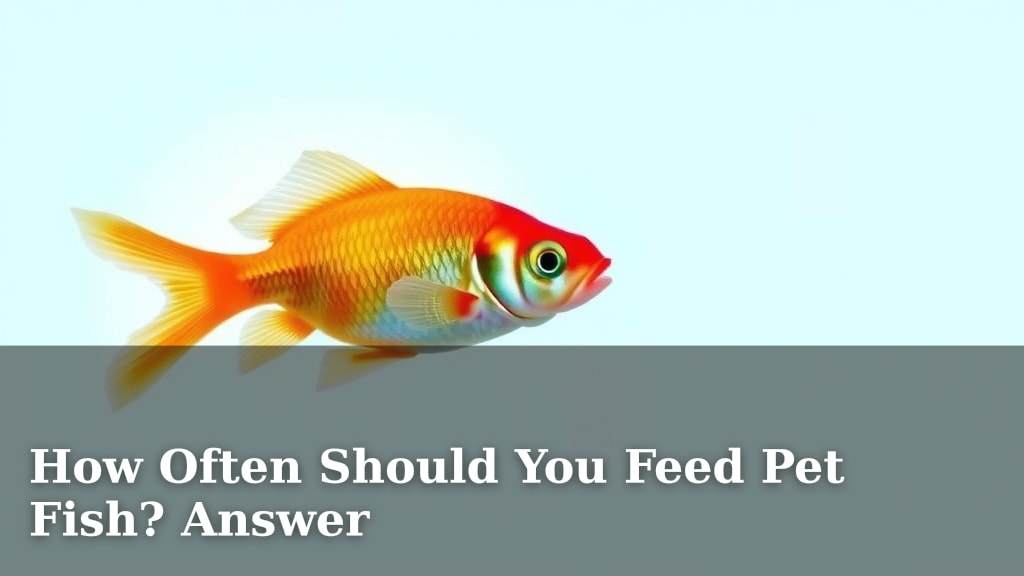
How Often Should You Feed Pet Fish? Answer
Most pet fish thrive on a diet of once or twice a day. This feeding schedule is suitable for the majority of common aquarium fish. Overfeeding is a far greater concern for fish health than underfeeding.
How much you feed your fish matters a great deal. It impacts their health and the water quality in their tank. Understanding their specific needs will help you avoid common pitfalls, like a cloudy or unhealthy aquarium.
- Feed most fish once or twice daily.
- Only offer what they can eat in 2-3 minutes.
- Watch for signs of overfeeding like uneaten food.
- Different fish species have different dietary needs.
Let’s walk through exactly how often you should feed your finned friends and what to watch out for.
How Often Should You Actually Feed Your Pet Fish?
It’s a question many fish keepers ask when they first bring home their aquatic friends. The general rule of thumb, as you saw in the intro, is to feed most common aquarium fish once or twice a day. But, like with many things in the fish-keeping hobby, there’s a little more to it than a simple number. We need to consider the type of fish, their age, and even the type of food you’re offering.
Understanding Your Fish’s Natural Feeding Habits
To feed your fish appropriately, it helps to think about how they eat in the wild. Are they scavengers that graze all day? Are they hunters that ambush prey? Or are they picky eaters with very specific tastes? Different fish have evolved different strategies. Understanding this can give you a big clue about their feeding needs.
Carnivores vs. Omnivores vs. Herbivores
This is a foundational concept. Carnivores eat meat, herbivores eat plants, and omnivores eat a bit of both. The food you offer should reflect this. For instance, a fish that primarily eats insects and small crustaceans in nature will need protein-rich foods. A fish that nibbles on algae and plant matter will need foods with higher fiber content.
Many common community fish, like tetras and guppies, are omnivores. They’ll happily munch on flakes or pellets that contain a mix of plant and animal matter. Then you have specialists, like some plecostomus varieties, which are almost entirely herbivorous and need a constant supply of algae wafers or blanched vegetables. Feeding a herbivore a diet solely of meaty foods will lead to poor health over time.
Young Fish Need More Fuel
Just like human babies and children, young fish, often called fry, have different nutritional requirements. They are growing rapidly. This means they need more frequent meals, and often, smaller, more easily digestible food particles. Many breeders will feed fry multiple times a day, offering tiny portions to ensure they get enough nutrition without fouling the water.
As fish mature, you can generally reduce the frequency of feeding. An adult fish doesn’t need the same constant energy intake as a growing youngster. This is why a once-a-day feeding schedule often becomes sufficient for adult fish. You’ll notice that commercial fish foods often have different formulations for fry and adult fish for this very reason. Always check the packaging!
The 2-3 Minute Rule: How Much is Too Much?
This is perhaps the most critical piece of advice for preventing overfeeding. When you add food to the tank, offer only what your fish can consume within a two to three-minute window. After this time, any uneaten food starts to break down. This is where problems begin.
Why Uneaten Food is a Problem
When fish food sinks to the bottom and isn’t eaten, it decomposes. This decomposition process consumes oxygen in the water. It also releases ammonia, which is highly toxic to fish. Ammonia is then converted to nitrite, which is also toxic, by beneficial bacteria. These bacteria are what you work hard to establish in your filter!
The breakdown of excess food is a primary cause of cloudy aquarium water and can lead to a rapid decline in water quality. This cycle can stress your fish, make them susceptible to disease, and in severe cases, be lethal. It’s a common mistake for new fish keepers to think their fish are always hungry and give them more than they can eat. You’re not being cruel by not overfeeding; you’re being responsible.
Observing Your Fish’s Eating Habits
Pay attention when you feed your fish. Do they gobble everything up instantly? Or do you see food pellets sinking and remaining untouched after a few minutes? Your fish will tell you if you’re feeding too much or too little. If they’re frantically eating and still seem interested after a couple of minutes, you might be close to the right amount.
Conversely, if you consistently see food left over, it’s a clear sign you need to reduce the portion size. It might take a little trial and error to get it just right. Don’t be afraid to adjust based on what you observe. Your goal is for them to eat what you give them without leaving a mess behind.
Factors That Influence Feeding Frequency
Beyond species and age, other elements play a role in determining how often you should open that food container. These are often overlooked but can be quite important for your fish’s well-being and the health of your aquarium ecosystem.
Water Temperature
Fish are cold-blooded, meaning their body temperature matches their environment. In cooler water, their metabolism slows down. They digest food more slowly and require less energy. In warmer water, their metabolism speeds up, and they need more food.
This is why during warmer months, you might notice your fish seem more active and hungry. Conversely, in cooler months, they might be less interested in food. It’s important to adjust feeding accordingly. Feeding a cold fish the same amount as a warm fish can lead to digestive issues and waste buildup. Always maintain a stable water temperature appropriate for your fish species.
Tank Mates and Competition
If you have a community tank with many fish, especially if some are more aggressive or faster eaters, you need to ensure everyone gets a fair share. Some fish are shy and might not get to the food before the bolder fish do. In such cases, you might need to feed slightly more often, or use methods to ensure slower eaters can access food, like dropping food in different parts of the tank.
We’ve found that in tanks with a mix of species, scattering food across the surface can help. This gives the slower fish a better chance. For fish that primarily eat from the bottom, like certain loaches or corydoras, ensure they are fed sinking pellets or wafers, ideally in the evening if they are nocturnal. It’s about making sure all your fish get fed.
Type of Food
Not all fish foods are created equal. Flakes might be eaten quickly by some fish, while pellets might sink too fast for others. Foods that are highly digestible and nutritious will keep your fish satisfied for longer. Conversely, cheaper, filler-heavy foods might require more frequent feeding to meet nutritional needs, but this also increases waste.
Treats, like frozen or live foods, are also important for some species. These are often more protein-rich and should be given sparingly. Think of them as a special occasion meal, not an everyday staple. Always research the specific dietary needs of your fish species to choose the best food and feeding strategy. The quality of the food makes a huge difference.
Signs of Overfeeding and Underfeeding to Watch For
Your fish will often show you if something isn’t quite right with their diet. Learning to recognize these signs can help you intervene before a minor issue becomes a major problem.
What Overfeeding Looks Like
The most obvious sign is food that sits uneaten at the bottom of the tank. You might also notice increased algae growth on the glass or decorations. Fish that are overfed can become sluggish and may even develop swim bladder issues. Their bellies might appear bloated. And, as we’ve discussed, water quality will suffer, leading to cloudy water and potentially toxic ammonia levels.
What Underfeeding Looks Like
If your fish are consistently hungry and seem to be chasing every last speck of food, they might be underfed. You may see them becoming thin, particularly around the head area. Their colors might start to fade. They might become lethargic due to a lack of energy. In severe cases, a weakened immune system can make them more susceptible to diseases. A healthy fish is typically active and vibrant.
Your Fish Feeding Checklist
Here’s a quick rundown to help you get it right:
- Observe: Watch your fish eat to gauge portion size.
- Time It: Ensure they finish food within 2-3 minutes.
- Frequency: Aim for once or twice daily for most adults.
- Species-Specific: Research your fish’s unique dietary needs.
- Water Quality: Monitor for cloudiness and ammonia spikes.
- Adjust: Never be afraid to change food amounts or timing.
Conclusion
You’ve learned that feeding your pet fish isn’t a one-size-fits-all approach. While once or twice a day is a good starting point for most adult fish, understanding their species, age, and natural habits is key. Always remember the 2-3 minute rule to prevent overfeeding, which can seriously harm your fish and tank environment. By observing your fish and adjusting their meals based on their behavior and tank conditions, you’ll ensure they stay healthy and vibrant. Your next step is to watch your fish eat today and see if they finish everything in under three minutes. If not, it’s time to adjust their portion size!
Frequently Asked Questions
Can I feed my fish just once every other day?
For most adult fish, feeding once every other day is generally not recommended. Consistent daily meals help maintain stable energy levels and nutrient intake. Skipping days can lead to malnutrition and stress for your fish.
What happens if I accidentally overfeed my fish?
Overfeeding leads to uneaten food decomposing in your tank. This process depletes oxygen and releases toxic ammonia, which can poison your fish. It’s the most common cause of poor water quality in aquariums.
How can I tell if my fish are getting enough to eat?
Watch their eating habits. If they frantically eat everything within 2-3 minutes and still seem interested, they are likely getting enough or could even be fed slightly less. If they look thin or lethargic, they might be underfed.
Should I feed my fish differently if they are sick?
Generally, when fish are sick, their appetite decreases, and their metabolism slows. It’s often best to reduce feeding or stop for a short period until they show signs of recovery. Consult with a veterinarian or experienced aquarist for specific advice.
Is it okay to feed my fish different types of food every day?
Variety can be good for fish, but it should be managed carefully. Stick to high-quality foods appropriate for your fish species. Occasional treats like frozen or live foods are fine, but should not be the sole diet.